
SIBUR tests logistics systems for Tobolsk polypropylene expansion
SIBUR is testing logistics equipment for its Tobolsk polypropylene expansion with automated storage and packing ahead of the planned production startup in 2027.
Tests begin before production startup
SIBUR has begun commissioning the logistics complex for its DGP-2 polypropylene project at Zapsibneftekhim in Tobolsk, Russia. The first filling line is undergoing tests. Software installation and a phased transition to automatic operation are the next steps. Production remains scheduled for 2027.
The approximately RUB 195 billion project includes propane-dehydrogenation capacity of 550,000 tonnes a year and polypropylene capacity of 570,000 tonnes a year. Existing site capacities are 1 million tonnes of polypropylene and 2.5 million tonnes of base polymers annually. Construction and installation work is targeted for completion by September 2026.
Automated packing and storage
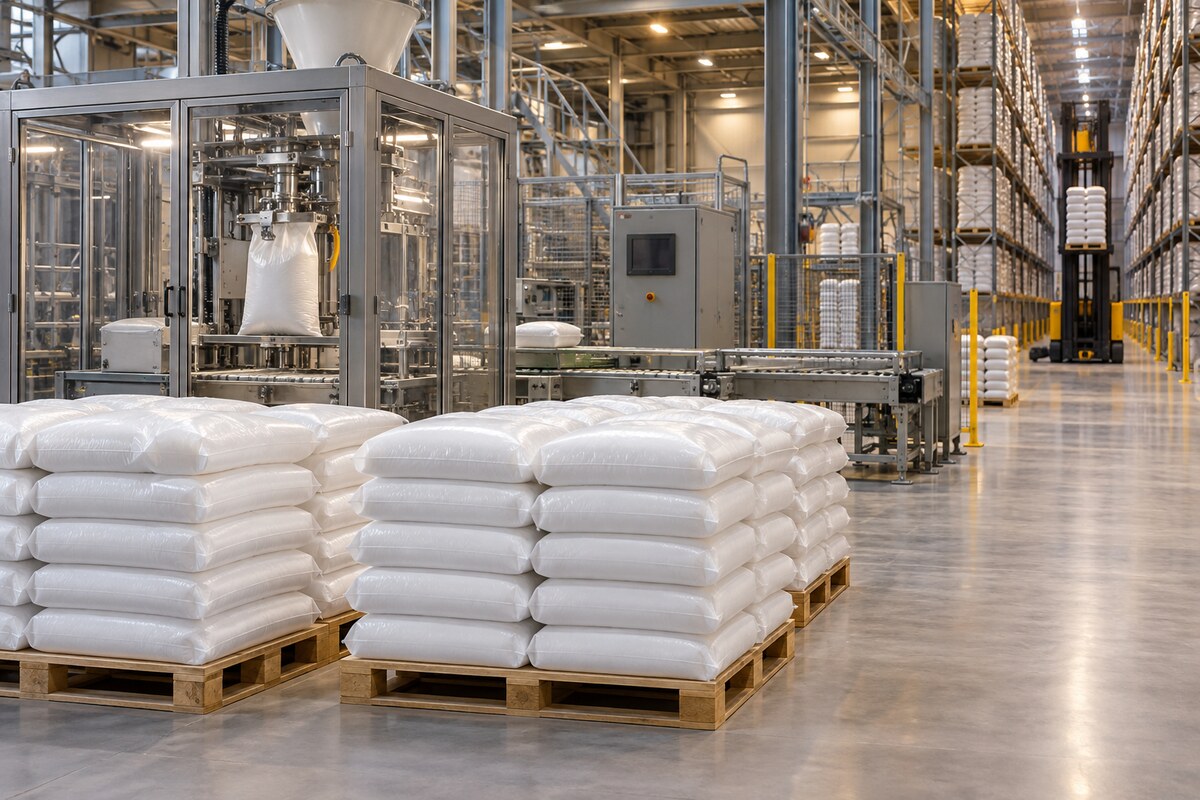
The logistics design covers product reception, sorting, palletising, packaging, movement and dispatch, according to logistics director Roman Nikolenko. Packing equipment checks for metal contamination and correct weight before stacking bags, pressing, wrapping and labelling. Each of two filling lines is rated at 60 tonnes an hour, with weighing accuracy of up to 12.5 grams. Planned shipments reach up to 2,000 tonnes daily.
A seven-level warehouse uses master pallets to move finished loads. Unmanned stacker cranes are intended to travel vertically and horizontally; forklifts would load vehicles and containers. A warehouse-management system coordinates packing assignments, equipment and dispatch without controllers. Access is limited to technical personnel, and abnormal situations trigger automatic stops. Predominantly plastic pallets made from SIBUR raw materials are planned for finished products.

Other systems under construction
Installation of an enclosed flare began on March 3, 2026. The system incorporates 63 automatic multi-jet burners protected by wind shields and includes redundant protection. Operations-block head Mikhail Lyulkin said the flare helps maintain stable pressure when operating conditions change, including during maintenance and startup. Fans inside the installation improve airflow around the combustion streams. The enclosed arrangement keeps the flame inside the equipment, according to the company.
By the March update, the DGP-2 project was more than 80% complete. SIBUR expected the new production facility to create approximately 300 technical jobs. Across its businesses, SIBUR planned about 5,000 new skilled jobs over the next two years, primarily engineering, technology and operations roles. The new polypropylene range is intended to include grades not previously manufactured domestically.

Commissioning sequence
- Test the first filling line.
- Load the control software.
- Introduce automatic operation in stages.




















Leave a comment