
Cordiant’s manufacturing network under a new chief executive
Dmitry Gorbachev takes charge of Cordiant after factory restarts, product expansion and changes in production, research and workforce development.
A new chief executive and a four-city network
Dmitry Gorbachev became chief executive of Cordiant on 8 February 2026, moving from the position of deputy CEO for strategic development and business systems. He succeeded Vadim Volodin, who had led the company since 2016 and left to pursue personal projects. Gorbachev brought more than 15 years of experience in operating efficiency and lean production, including work at Severstal and Power Machines. He served as first deputy governor of the Vologda Region in 2022–2023.
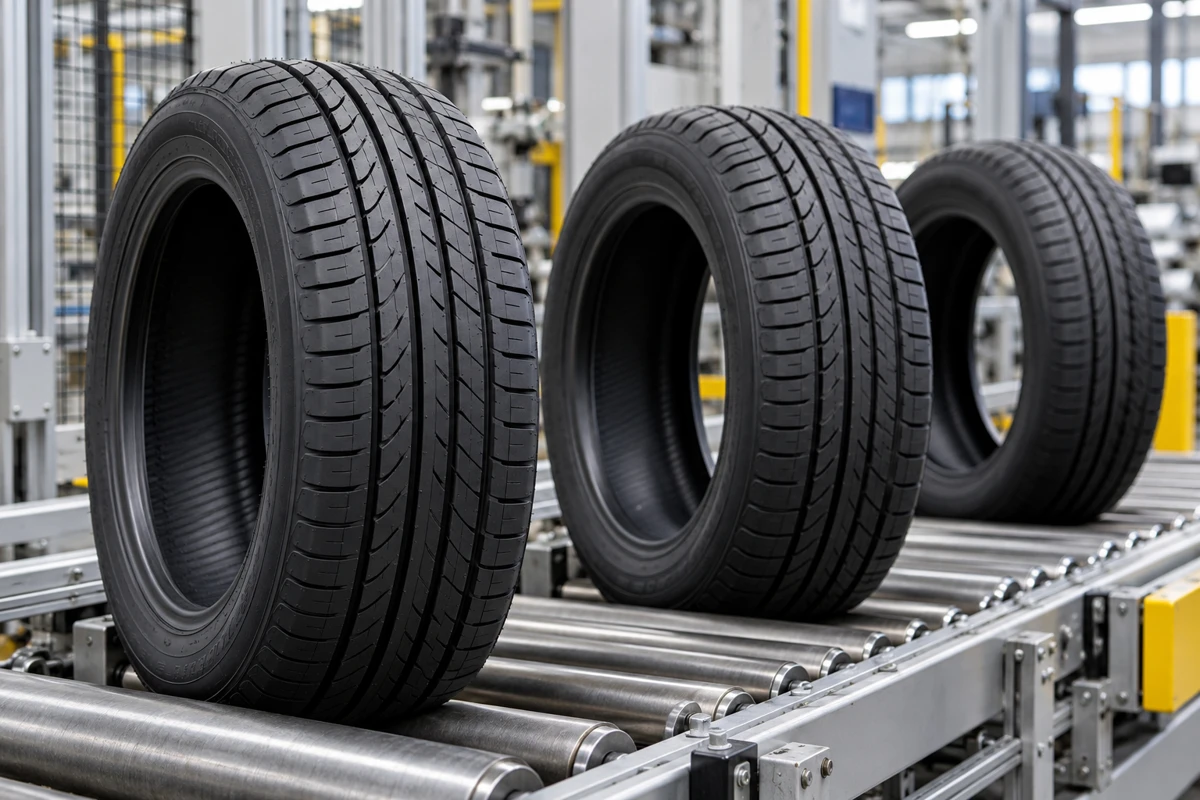
Gorbachev subsequently headed Severgroup's operating efficiency and innovation department before joining Cordiant in December 2024. His appointment put him in charge of a manufacturing network across Russia, with annual design capacities listed in February 2026 as 3.6 million tires in Yaroslavl, 5.5 million in Omsk, 3.2 million in the Kaluga Region and 2.4 million in Ulyanovsk. The group's overall capacity was described as approximately 15 million tires annually.
The Kaluga asset transfer
Continental completed the sale of its Kaluga plant to S8 Capital in May 2023 after obtaining regulatory approvals. The transaction included the tire division's Moscow distributorship, with the purchase price and further commercial details undisclosed. Continental and the buyer agreed to transfer responsibility for around 1,100 employees. The site had manufactured passenger tires as well as air-conditioning and power-steering lines and air-suspension components. The 22 May announcement described the disposal as part of Continental's controlled withdrawal following the war against Ukraine. The company, based in Germany, still retained other Russian interests at that date, including shares in a tachograph joint venture with Mettem in Chistopol. Those remaining operations had their own disposal processes and regulatory requirements.
The Ulyanovsk acquisition
Bridgestone Europe announced the approved sale of its Russian assets to S8 Capital on 20 December 2023. The agreement covered the Ulyanovsk tire factory and a Moscow sales and marketing office, with about 1,000 employees due to transfer to the buyer. Bridgestone, headquartered in Japan, had been present in Russia since 1998 and had suspended manufacturing there in March 2022. It said it continued paying employees' salaries and benefits during the period leading to the transfer. The employee number described the workforce involved in the transaction. Together with the earlier Kaluga purchase, the disposal placed another former international manufacturer's factory under S8 ownership, before its subsequent integration into the Cordiant network. Bridgestone expected the transfer to have only a minor effect on its consolidated projections for 2023.
Restarting production in Ulyanovsk
By November 2024, the Ulyanovsk factory had resumed production under Cordiant ownership. The restart began with a summer tire model carrying the Cordiant brand. The company said the testing and certification required to resume production and prepare for sales had been completed. Its manufacturing plan then envisaged adding Gislaved premium models during 2025 and beginning winter tire production in the first half of that year. The new assortment was to expand gradually as the site returned to operation.
The initial 2025 production target was 1.2 million tires, equivalent to half the factory's stated annual capacity of 2.4 million. Cordiant itself had changed owners in October 2024, when Severgroup, Alexei Mordashov's investment company, acquired the holding. The restart therefore followed both an asset transfer and a further change at group level.

The millionth tire after the restart
On 22 October 2025, the Ulyanovsk factory announced its millionth tire since the November 2024 restart. The milestone product was a studded Gislaved SpikeControl tire for the 2025–2026 winter season. Cordiant distinguished the start of test operations in November 2024 from the official relaunch in March 2025. By October, the plant offered 147 unique sizes across two brands and three product lines: Cordiant Run Tour, Cordiant SNO-MAX 7000 and Gislaved SpikeControl.
Gislaved occupied the premium segment in the holding's portfolio, while Cordiant served the middle price segment. The factory and the InTire scientific and technical center were working on additional sizes and product lines through test launches and initial batches. SpikeControl's announced size range ran from 13 to 20 inches. The plant still expected to reach 1.2 million tires by the end of 2025. The millionth tire was an achieved milestone within that production program, while the full-year target was still prospective.
Kaluga's production and shipment figures
The Kaluga factory completed its Gislaved rebranding in April 2024. In a February 2025 review, the company reported production of almost 2.7 million tires during 2024, exceeding its own plan by 23%. Director Pavel Borodatov said 220 new sizes had entered serial production since the rebranding and that further output growth was planned. The percentage measured performance against the production plan; it used a different comparison from a year-on-year growth rate.

Cordiant separately reported 2024 shipments of 2.7 million tires, a maximum monthly dispatch of 280,000 and a record daily dispatch of 31,000. The plant continued recruiting production operators, technical personnel and office staff as manufacturing expanded. Kaluga deputy governor Vladimir Popov described it as providing more than 1,000 jobs. Production, annual shipments and peak dispatch periods represented separate operating measures for the Rosva industrial-park site, rather than interchangeable estimates of its manufacturing capacity.
The manufacturing stages at Kaluga
A government delegation visited the Kaluga factory in July 2024, following its renaming earlier that year. First Deputy Prime Minister Denis Manturov was accompanied by Deputy Industry and Trade Minister Mikhail Yurin and Kaluga Governor Vladislav Shapsha. The visitors followed the manufacturing route through rubber mixing, material preparation, assembly, vulcanization and product-quality inspection. They also viewed passenger, light-truck and truck tires from the holding's product portfolio. The exhibition represented the wider group assortment shown during the visit.
At that time, Vadim Volodin said the holding was prepared to increase production of sizes in demand and had established supplies of raw materials already approved for use within its manufacturing cluster. He forecast Kaluga output growth of more than 25% for 2024 in response to premium-tire demand. That July forecast preceded the subsequent review of the year's production and shipments. Shapsha emphasized the plant's employment contribution and its place within the regional automotive cluster.

Equipment modernization in Omsk
Omskshina brought an upgraded radial-tire building machine into service in its assembly and vulcanization workshop in May 2025. The equipment was configured for tires with a 20-inch rim diameter and profile widths from 9 to 12 inches. Its stated capability was up to 430 tires per day. Installation, adjustment and commissioning to the required operating parameters took about three months, following extensive modernization carried out locally in Omsk.
Larisa Grishina, Omskshina's chief executive, said the changes also covered vulcanization equipment for sizes in demand. Employees of the holding's TechnoTyr repair center were modernizing the molds. Omskshina produced tires under the Omskshina and Tyrex CRG brands. The project combined work on a tire-building machine with updates to associated curing equipment, while the reported daily figure described the upgraded machine's capability rather than a measured average for the whole factory.
Quality checks and employee participation
The Ulyanovsk factory organized a quality and production-technology week in November 2025, around the national Quality Day on 13 November. Its quality arrangements included a laboratory, multiple testing methods and checks at successive production stages, including three-stage inspection of finished products. The company also described regular audits, certification, training and mentoring. The themed week opened up these activities to employees beyond the departments directly responsible for making or testing tires.

Laboratory and production-area tours were aimed particularly at non-production staff. Other activities included a professional-skills competition, a quiz and a children's drawing contest. Plant director Andrei Abramov described quality management as a process extending beyond final inspection and involving employees across the organization. The program placed laboratory work, shop-floor practices and staff understanding within the same workplace initiative, alongside the factory's established inspection and training arrangements.
Workplace safety training
In September 2025, Ulyanovsk held a production-safety week aligned with the national occupational-safety event. Employees took part in activities intended to develop the site's occupational-health-and-safety management system. The company described participation extending from senior management to machine operators, with technical measures accompanied by training and employee awareness. The program included a quiz on workplace rules, practical safety demonstrations and exercises organized for the factory workforce.
Additional activities covered first-aid training, a fire-evacuation exercise and a children's drawing exhibition. Abramov presented workplace safety as a continuing process of improvement. The events were described as ways to maintain attention to production risks and employee participation in the factory's safety system.

Recruitment links with Ulyanovsk State University
The Ulyanovsk plant and Ulyanovsk State University's Career center organized a student careers event ahead of Chemist's Day in May 2025. It was the factory's first such student-recruitment event since its relaunch under the Gislaved name. Students met specialists from the local InTire branch and the quality-control department, visited the laboratory, learned about production and spoke with human-resources staff. University participants included teaching staff from the engineering-physics faculty of high technologies.
Discussions covered professional knowledge, skills, employment opportunities and working conditions. Plant HR director Nikita Rusinovich said the factory could recruit people without prior experience, train them and offer internships, with opportunities for both promotion and moves between functions. Nikolai Laptev, director of the university's Career center, described industrial visits as a way for students to assess occupations and employers directly. The event established a basis for further cooperation through contact between university staff, students and factory departments.
Engineering education links in Kaluga
Kaluga hosted representatives of the Moscow and Kaluga branches of Bauman Moscow State Technical University in October 2025. University managers and teaching staff discussed broader cooperation in preparing engineers for tire manufacturing. Proposed activities included expanded industrial placements, internships and graduation projects based on actual factory tasks. The delegation toured the complete manufacturing cycle and discussed raw-material and software import substitution, as well as the development and production of winter tires.

A question-and-answer session with factory management covered current industry challenges and development plans. Pavel Borodatov emphasized a systematic approach to preparing future specialists and described a path from practical training toward employment. The parties intended to define the formats and schedules of their educational and careers projects after the visit. The October discussions therefore concerned the development of cooperation, with the detailed arrangements still to be specified rather than a completed new teaching program.
An integrated management-system audit
Kaluga reported passing a scheduled audit of its integrated management system in October 2025. Certification specialists from the DKS group assessed the system against ISO 14001:2015 for environmental management, ISO 45001:2018 for occupational health and safety, and ISO 50001:2018 for energy management. The company said the review confirmed compliance with those standards and recognized cooperation between teams and work to optimize production processes.
The factory placed the audit within a wider strategy covering production expansion and stabilization, international markets, efficiency, research and development, digital transformation and workforce development. Borodatov connected these management activities with meeting customer expectations. The standards addressed the organization of environmental, workplace-safety and energy-management systems. They provided the framework cited for the audit, while laboratory testing and inspection remained separate parts of the factory's product-quality arrangements.

Resource use in the Kaluga strategy review
In March 2025, the Kaluga plant reviewed its environmental strategy for 2021–2024. It reported reductions per tonne of finished product of 34% in water use, 23% in electricity consumption and 31% in heat consumption. Closed-loop water arrangements enabled reuse of 1,386 cubic meters. Borodatov separately reported reductions in electricity costs of 13% and heating costs of 12%, linking the work to modernization, water reuse and internal energy audits.
The same review recorded a 12,600-tonne reduction in carbon-dioxide emissions associated with electricity and heat optimization. The company said 90% of production waste went to recycling or neutralization, with separate collection of plastics, glass, paper and hazardous materials. Four dust-and-gas cleaning units operated at stated efficiencies of up to 99%. These were factory-reported results and equipment characteristics within the 2021–2024 strategy review; the per-tonne consumption measures and the cost measures retained their separate bases.
Kaluga's recurring quality program
Kaluga's Quality Day program dates back to the start of serial production in 2013. In December 2024, the plant scheduled its annual series of events for 3–9 December and planned to recognize 50 employees with awards and prizes afterward. The program brought employee recognition together with the factory's quality theme, continuing an established workplace event following the site's change of ownership and name.
Borodatov described safe workplaces, manufacturing efficiency and the quality of production and products as principles applying to every employee, regardless of department. He also emphasized a cohesive and motivated team.
Research equipment under development
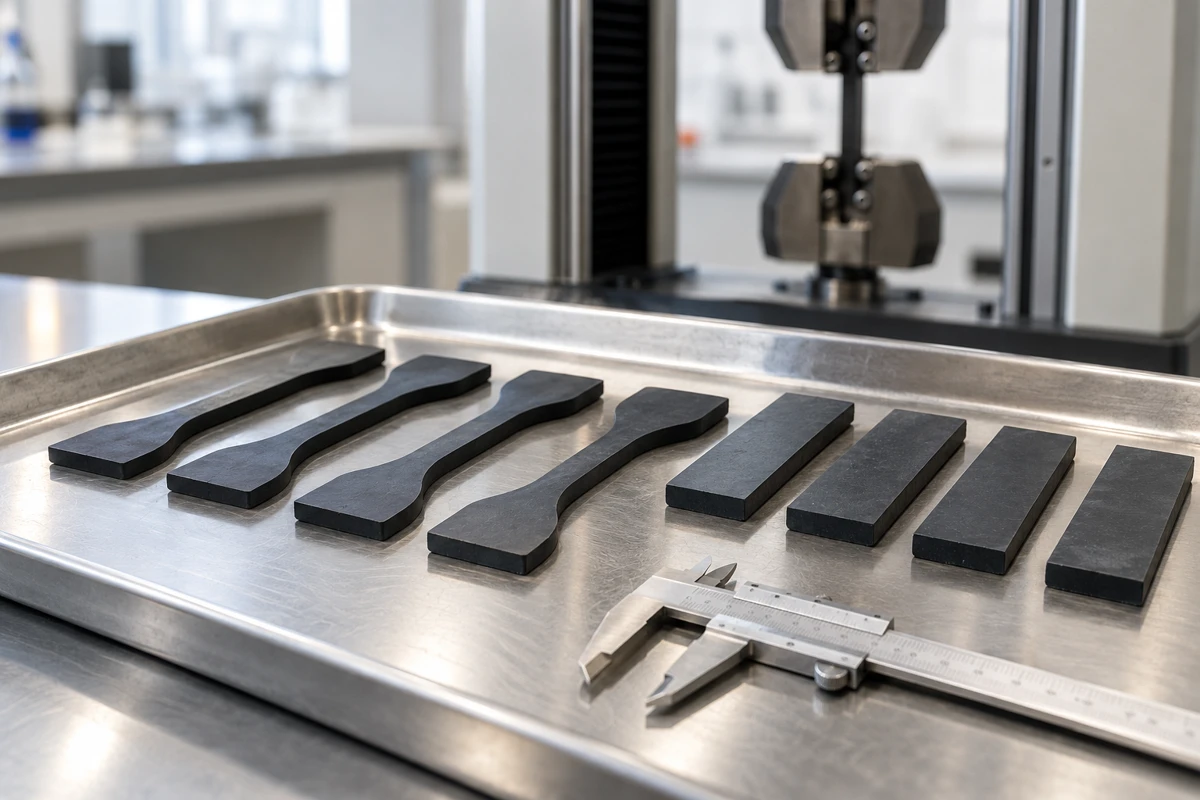
In November 2025, InTire and Irkutsk National Research Technical University were developing a test bench to study tire-road friction. The equipment was intended to determine how frictional force changes with sliding speed and contact pressure. The development plan separated the initial study of rubber friction and selection of a coefficient-measurement approach from the subsequent testing and validation work.
The next phase was to test rubber at the required loads and speeds, develop the measurement procedure and verify it. Cordiant expected the equipment to evaluate rubber on dry, wet and icy surfaces and to enter service at InTire within the following two years. Those capabilities and the commissioning window were still development objectives in November 2025.
- Study rubber friction and select the measurement approach.
- Test the required loads and sliding speeds.
- Develop and validate the coefficient-of-friction procedure.




















Leave a comment