
DSV and Schenker: financing a larger logistics network
DSV’s Schenker acquisition combines logistics networks through financing, approvals and a phased integration.
DSV agrees to buy Schenker from Deutsche Bahn
DSV also planned €10 million of additional compensation as part of its response to union resistance.
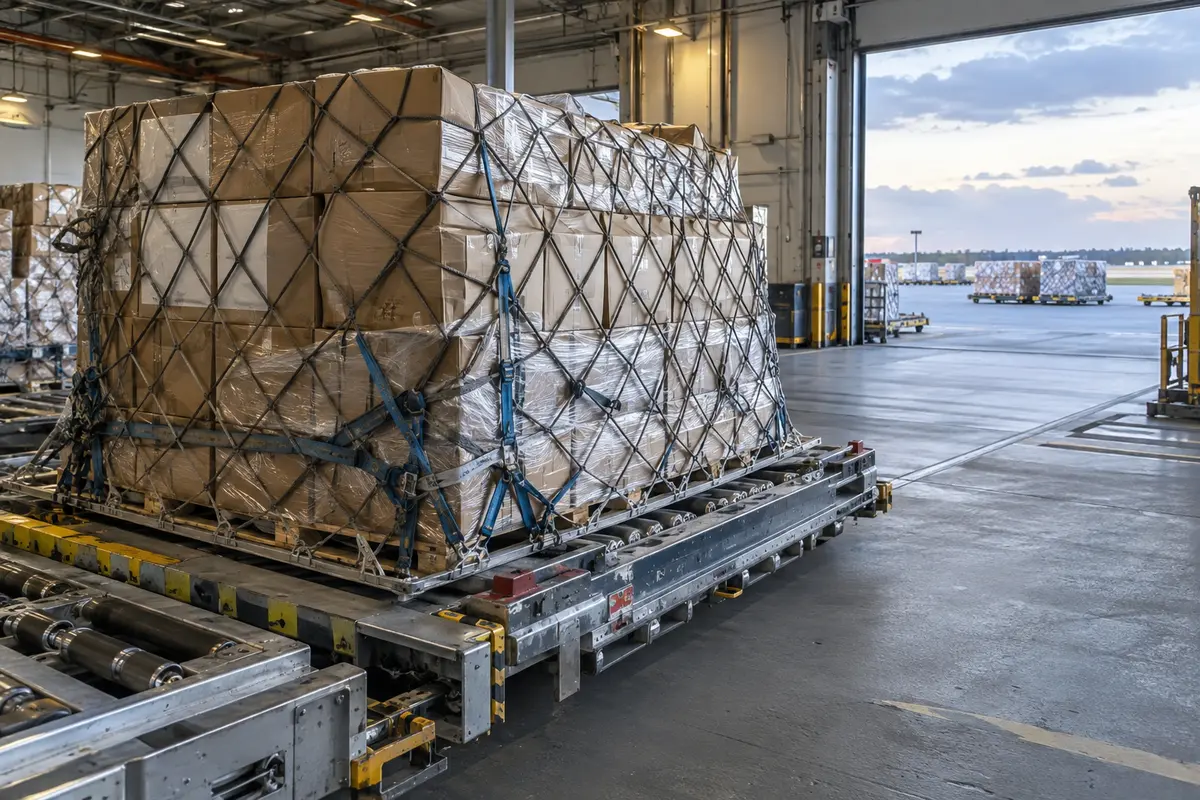
DSV agreed on Sep 13, 2024 to acquire Schenker, the logistics subsidiary of German state railway Deutsche Bahn, in a transaction valued at €14.3 billion. The Danish company expected the combination to overtake DHL and Kuehne+Nagel in revenue and freight volumes, while holding only an estimated 6–7% of the fragmented global logistics market. Completion was initially expected in the second quarter of 2025, subject to government, supervisory-board and regulatory approvals.
Employment formed part of the negotiations. Chief financial officer Michael Ebbe told Reuters that DSV planned to cut 1,600–1,900 jobs from Schenker’s German workforce of 15,000. He also said a planned €1 billion investment would leave the combined business with more German employees in five years than the two companies then employed together. Those were forecasts alongside union concerns about potential job losses. Reuters’ transaction coverage included the proposed workforce changes.
A freight forwarder built through acquisitions
DSV began in 1976 when Leif Tullberg and nine other independent truckers established a business arranging transport. Its services expanded from moving individual pallets to managing supply chains for multinational companies. The intermediary model connected businesses needing to move goods with transport capacity, and acquisitions became a recurring part of the company’s expansion. By September 2024, DSV had more than 75,000 employees, before adding Schenker’s workforce.
Earlier transactions included the purchase of United States logistics company UTi for $1.35 billion in 2016, Switzerland’s Panalpina for $4.6 billion in 2019 and Kuwait’s Global Integrated Logistics for $4.2 billion in 2021. Those acquisitions preceded the Schenker agreement by several years and covered businesses from different national markets. Schenker represented another large addition to a group whose operations already extended beyond its original trucking background into international freight forwarding and logistics management.
Three divisions and a larger operating network
The proposed combination covered all three DSV divisions. In Air & Sea, the combined network would handle approximately 4.3 million twenty-foot-equivalent container units and 2.4 million tonnes of air freight annually. Schenker’s European road business, particularly its position in Germany, would strengthen the Road division. Contract logistics would gain approximately 8.5 million square metres of warehousing capacity, bringing the combined total to about 17.5 million square metres across more than 60 countries.
DSV envisaged cross-selling services, combining logistics facilities and consolidating administration and IT infrastructure. These were expected commercial and operational benefits. It obtained committed acquisition-financing facilities from BNP Paribas, Danske Bank, HSBC and Nordea. The company also discontinued its share-buyback programme of up to DKK 1.5 billion, which had started in July 2024. Until closing, DSV and Schenker would continue as separate companies. Social undertakings relating to Schenker employees in Germany were to apply for two years after completion.

Approval by the seller and the German government
Deutsche Bahn’s supervisory board approved the sale at an extraordinary meeting on Oct 2, 2024. The federal government granted its required approval under the Federal Budget Code on the same day. Regulatory clearances remained outstanding, and completion was still expected during 2025. The supervisory-board decision followed the purchase agreement signed by Deutsche Bahn’s management board in September.
Deutsche Bahn intended to use the proceeds to reduce debt and concentrate on its rail business. Its objectives covered modernising railway infrastructure and improving passenger and freight operations. DSV had committed to German employee co-determination and existing collective and company agreements. The seller also highlighted planned investment in Schenker’s future development.

Equity financing through an institutional placement
The new shares were to rank equally with existing shares, including voting and dividend rights from registration of the capital increase.
On Oct 4, 2024, DSV completed an accelerated bookbuilding for 26,444,523 new shares at DKK 1,410.50 each. Gross proceeds were DKK 37.3 billion, approximately €5 billion, intended to partly finance the Schenker acquisition. Institutional investors in Denmark and internationally participated without pre-emption rights for existing shareholders. The offering was oversubscribed, requiring individual allocations of shares rather than automatically satisfying every subscription request.
Cornerstone commitments totalled DKK 21 billion. Participants included investment funds and accounts associated with BlackRock, CPP Investments, Capital Group and Norges Bank Investment Management, alongside BLS Capital and ATP. The new shares represented approximately 12.4% of capital before the increase and 11% after it. DSV, executive management and board members undertook 180-day lock-ups, subject to exceptions. Settlement and registration were scheduled for Oct 8, with admission to trading expected around Oct 9. Those scheduled steps followed completion of the bookbuilding and were distinct from the later acquisition closing.
Debt financing spread across six maturities
DSV Finance B.V. placed €5 billion of senior unsecured notes under its Euro Medium Term Note programme. The Nov 4, 2024 announcement scheduled issuance for Nov 6. Six tranches spread the funding across maturities from two to ten years. Net proceeds were intended to fund the Schenker acquisition, including reducing commitments under the bridge-financing agreement. BNP Paribas, Danske Bank, HSBC and Nordea acted as joint bookrunners on the transaction.
- Two-year notes comprised a €600 million floating-rate tranche and €650 million fixed-rate tranche.
- Four- and six-year fixed-rate notes raised €1 billion and €1.25 billion respectively.
- Eight- and ten-year fixed-rate tranches each amounted to €750 million.
The floating-rate tranche paid three-month Euribor plus 50 basis points. Fixed coupons ranged from 2.875% to 3.375%. The average issue price was 99.669%, and average duration was 5.5 years. Five of the six tranches therefore had fixed coupons, while the remaining tranche retained a variable interest-rate component.

The seller’s separate rail restructuring programme
Deutsche Bahn presented its S3 restructuring programme on Sep 18, 2024, shortly after agreeing the Schenker sale. The programme targeted improvements in infrastructure, railway operations and profitability by 2027. Its financial objectives included an operating result of €2 billion for the Integrated Rail System and debt coverage of 12%, defined as operating cash flow relative to adjusted net financial debt.
The programme also targeted a reduction in the personnel expense ratio from 52% to 50%. Administrative, sales and indirect operational staffing reductions were to use measures including natural attrition, internal job transfers and voluntary partial retirement. No redundancies were planned under that rail programme at the time. These were Deutsche Bahn’s plans for its retained rail system, separate from DSV’s proposals concerning Schenker’s German workforce.

What the competition review covered
The European Commission received notification of DSV’s proposed acquisition on Mar 4, 2025. It approved the operation on Apr 8, declaring it compatible with the internal market and the European Economic Area Agreement. The transaction involved DSV acquiring sole control through the purchase of Schenker’s entire share capital. DSV was headquartered in Hedehusene and listed on Nasdaq Copenhagen, while Schenker was based in Essen and wholly owned by Deutsche Bahn before the transaction.
Both companies provided freight forwarding and contract logistics. Freight forwarders arrange transport from shipper to consignee and may handle customs clearance and combine cargo shipments. Their asset-light businesses subcontract transport to airlines, shipping companies, railways and trucking companies. Contract logistics covers the flow of goods and services within warehouses, including stock management and order processing. Additional services can include assembly, quality control, repackaging, labelling, returns and repairs, alongside outbound freight management. These activities defined the operating businesses brought together by the acquisition.

The standalone financial base before completion
Annual diluted adjusted earnings per share were DKK 51.6, compared with DKK 58.7 in 2023. The company reported an 8.4% decline in operating profit before special items at constant exchange rates.
DSV generated revenue of DKK 167,106 million in 2024, compared with DKK 150,785 million in 2023. Operating profit before special items was DKK 16,096 million, against DKK 17,723 million a year earlier. Profit for the period was DKK 10,175 million, and adjusted free cash flow amounted to DKK 5,550 million. Those figures covered DSV before Schenker became part of its consolidated accounts.

Within the fourth quarter, Road faced weaker European economic activity, including in the automotive sector, alongside US operational challenges and a receivables write-off. Solutions added warehouse capacity and new sites, temporarily lowering utilisation. DSV’s initial 2025 outlook, published in February, projected operating profit before special items of DKK 15.5–17.5 billion. It expressly excluded the announced Schenker acquisition. The outlook assumed continued air and sea volume growth, while road-market conditions were expected to remain weak during the first half. The assumptions accompanied the standalone forecast rather than a combined-group earnings projection.
Completion and the initial integration timetable
DSV completed the acquisition on Apr 30, 2025 and began consolidating Schenker on May 1. The transaction’s enterprise value was approximately DKK 106.7 billion, or €14.3 billion, while equity value was approximately DKK 86.5 billion, or €11.6 billion. The combined business had pro-forma revenue of about DKK 310 billion based on 2024 financial results, with close to 160,000 employees across more than 90 countries.
At completion, DSV estimated annual synergies of DKK 9 billion by the end of 2028 and total transaction and integration costs of approximately DKK 11 billion. The costs would be charged as special items during integration. The company targeted a return to financial gearing below two times EBITDA before special items by the first half of 2027, from an expected pro-forma ratio around three times at closing. Its earlier standalone financial ambitions for 2026 were withdrawn pending revised targets incorporating Schenker.
Deutsche Bahn retains the disposal proceeds
Deutsche Bahn confirmed that it would retain all proceeds from the Schenker sale to substantially reduce its debt. The seller linked the disposal to a simpler group structure and greater focus on its core railway business and S3 programme. It had begun the competitive sales process in December 2023 and selected DSV’s offer as the most financially advantageous.
The final approvals included clearances from competition authorities in the European Union and the United States in the weeks before completion. Deutsche Bahn had also sold Arriva, its European regional and local transport subsidiary, in summer 2024. The Schenker disposal followed that separate transaction.
The first consolidated quarter and leadership changes
Schenker contributed two months of results to DSV’s second quarter of 2025. Group operating profit before special items reached DKK 4,725 million, including DKK 925 million from Schenker. Quarterly revenue was DKK 61,983 million, while profit for the period was DKK 2,356 million. Those quarterly figures included May and June under the new ownership, following the April closing.
DSV appointed more than 500 executives by May to establish the combined global leadership team. Negotiations with German works councils produced a framework agreement, enabling planned integration in Germany during the second half. The first country integrations were scheduled for the third quarter, beginning with Air & Sea. A separate governance proposal changed: former Schenker chief executive Jochen Thewes would no longer be nominated to DSV’s board after accepting an executive role elsewhere that the parties considered incompatible with the board seat. The planned nomination at closing therefore did not become an appointment through that process.
Country integrations begin and forecasts change
The first country integrations began in August 2025 and accelerated during the third quarter. DSV attributed Air & Sea’s faster delivery of synergies to its standardised IT setup and asset-light model. Road and Contract Logistics also required changes to physical facilities, which took longer. Third-quarter operating profit before special items reached DKK 5,434 million, including DKK 1,463 million from Schenker.
In October, DSV raised its expected 2025 financial benefit from synergies to around DKK 800 million, from DKK 500–600 million. It expected approximately 30% of integration to be completed by year-end, compared with an earlier 15% assumption, and raised its end-2026 expectation from 50% to 70%. The company retained the DKK 9 billion annual synergy objective and DKK 11 billion total cost estimate. It also narrowed its full-year earnings guidance and increased expected 2025 integration costs. These were revised estimates as of October, alongside the country integrations already under way.
A shorter integration target after the first year
DSV’s 2025 revenue reached DKK 247,331 million, with operating profit before special items of DKK 19,611 million. Transaction and integration costs totalled DKK 4,527 million, above the company’s expected level for the year. Profit from continuing operations was DKK 8,463 million. The annual results incorporated eight months of Schenker’s consolidated contribution, rather than a full year of combined ownership.
By February 2026, DSV said 30% of integration had been completed in 2025 and forecast completion by the end of 2026, bringing forward its earlier end-2028 timetable. It expected the full annual DKK 9 billion synergy benefit in 2027. For 2026, it forecast at least DKK 4 billion of incremental financial impact from synergies, following DKK 800 million in 2025. Total transaction and integration costs were still estimated at DKK 11 billion. The annual results announcement kept future integration benefits separate from the costs and results already recorded.




















Leave a comment