
Emerson’s automation portfolio: AspenTech, instruments and test systems
Emerson’s AspenTech buyout sits alongside additions in industrial measurement, factory automation and NI testing, with software updates spanning plants and labs.
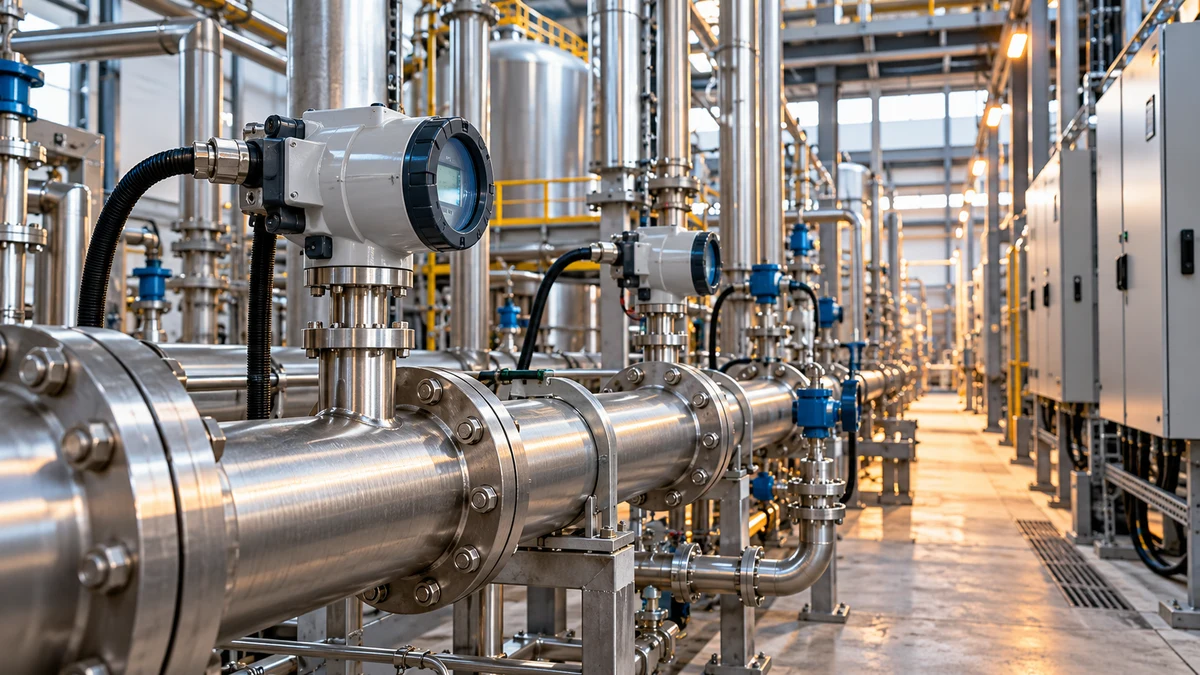
Emerson agreed on Jan 27, 2025, to buy the remaining shares of Aspen Technology for $265 each in cash, valuing the outstanding stake at $7.2 billion. It already owned 57% of the industrial software company. The agreement put AspenTech's enterprise value at $16.8 billion, with the price 10.4% above Emerson's November 2024 proposal of $240 a share.
The AspenTech agreement extended an investment begun in 2022, when Emerson paid $6 billion for a 55% holding. AspenTech's software included distribution management and geological simulation. Emerson initially expected completion by June 2025, financing the purchase with cash and debt.

Full ownership and the tender process
Emerson completed the purchase on Mar 12, 2025. AspenTech became a wholly owned subsidiary and continued as an independent business unit, with its results consolidated in Emerson's Control Systems & Software segment. The tender offer had expired at 5 p.m. Eastern time on Mar 11. A total of 19,479,909 shares were tendered, including 1,859,751 through guaranteed-delivery procedures. Those shares represented approximately 72% of the outstanding stock outside the holdings of Emerson, its subsidiaries, and the specified Emerson and AspenTech officers and directors.
The merger on Mar 12 entitled holders of shares remaining outside the tender offer to the same $265 cash payment per share. AspenTech's common stock ceased trading on Nasdaq. Goldman Sachs and Centerview Partners advised Emerson financially on the transaction, while Davis Polk & Wardwell provided legal advice. The completed transaction brought the remaining publicly held shares into Emerson's ownership at the agreed cash price.

NI added a test and measurement business
Emerson had completed its acquisition of NI on Oct 11, 2023, at an equity value of $8.2 billion. NI supplied software-connected automated test and measurement systems. Its customers operated in semiconductor and electronics production, transportation, aerospace and defence. The business had generated $1.66 billion of revenue in 2022, serving approximately 35,000 customers in more than 40 countries. Software represented around 20% of its sales. NI's products brought a test and measurement portfolio into Emerson's automation operations.
NI became a new Test & Measurement reporting segment within Emerson's Software and Control group, with headquarters in Austin, Texas. NI shares ceased trading on Nasdaq after completion. Emerson forecast $165 million in cost synergies by the end of the fifth year following the acquisition. It also expected NI to expand its exposure to discrete industries and contribute to its target of 4–7% organic sales growth through the economic cycle. These were the company's expectations when the transaction closed.

Ultrasonic flow measurement from FLEXIM
Emerson signed an agreement in August 2023 to acquire FLEXIM Flexible Industriemeßtechnik GmbH, based in Berlin, Germany. FLEXIM specialised in clamp-on ultrasonic measurement of liquids, gases and steam. Its installed base exceeded 100,000 flowmeters, and it employed approximately 450 people. Customers included chemical producers, water and wastewater operators, life sciences manufacturers, food and beverage businesses, and power companies.
Emerson intended FLEXIM to complement its existing Coriolis, differential-pressure, magnetic and vortex flow measurement technologies. The company planned to make FLEXIM's Berlin headquarters its Ultrasonic Flow Measurement Centre of Excellence following completion. The agreement's financial terms were undisclosed. At the time, closing was expected by the end of Emerson's 2023 fiscal year, subject to customary conditions. Emerson planned to report the acquired operation within its Measurement & Analytical segment. It forecast high-single-digit annual growth over the longer term for the global clamp-on ultrasonic flow measurement market.

Electric motion and handling equipment
Afag Holding AG, based in Zell, Switzerland, supplied electric linear motion, feeding and handling automation. Emerson agreed to buy the company in August 2023, adding those technologies alongside its pneumatic automation offering. Afag served manufacturers in battery production, automotive, packaging, medical equipment, life sciences and electronics. Its equipment formed part of factory automation systems, with electric motion and handling products extending the technologies Emerson offered to those customers.
Emerson said electric linear motion would expand its served market by more than $9 billion. The company described its existing factory automation operation as a $900 million business. It expected the electric linear motion segment to grow at a mid-single-digit annual rate. Financial terms were not disclosed. The agreement anticipated completion by the end of fiscal 2023, subject to regulatory approvals and customary conditions, with Afag reported in the Discrete Automation segment after closing.

Exiting the remaining Copeland interest
Emerson agreed on Jun 6, 2024, to sell its remaining interests in Copeland, formerly Emerson Climate Technologies. The transaction had an approximate value of $3.5 billion. Blackstone-managed funds would acquire Emerson's 40% common equity interest, while Copeland would repurchase the seller's note. Expected pre-tax cash proceeds were $3.4 billion, net of the release of $100 million in future indemnity obligations. Emerson planned to use approximately $2.9 billion in after-tax proceeds to reduce existing debt.
A wholly owned subsidiary of the Abu Dhabi Investment Authority and GIC were to invest alongside Blackstone. Emerson announced completion of the remaining equity sale on Aug 13, 2024. Copeland operated separately, supplying heating, ventilation, air-conditioning and refrigeration products. Its portfolio included compressors, controls, thermostats, valves, software and monitoring systems for residential, commercial and industrial customers. The June agreement covered both the equity interest and seller's note, while the August announcement confirmed the completed sale of Emerson's remaining ownership interest.

A field, edge and cloud architecture
Emerson introduced its Boundless Automation vision at Emerson Exchange EMEA in Düsseldorf in February 2024. The proposed architecture connected three computing domains through a common data fabric: the intelligent field, the operational technology edge and the cloud. Emerson intended the arrangement to preserve the context of industrial data as it moved between systems. Its stated objectives included connecting information used for production, reliability, safety and sustainability, which it described as fragmented across separate functional systems.
The intelligent field included smarter devices and connection technologies such as 5G and advanced physical layer, or APL. Emerson described the edge as a secure, low-latency computing environment placing software and operational information close to users. Cloud applications would support engineering, analytics and collaboration across facilities and enterprises. The company presented this as a development strategy for its automation portfolio, with software deployment across all three domains. Its expectations for productivity, usability and operational improvements formed part of that proposed architecture.
Controllers, connectivity and software licensing
DeltaV Version 15 Feature Pack 1, released in October 2023, added native PROFINET integration to the DeltaV PK Controller line. That connection prepared the controllers to integrate APL devices in process environments. The new PK Flex Controller offered software-defined control capacity through a subscription. Customers could adjust that capacity as engineering and operating requirements changed over a facility's life. Emerson described the subscription approach as a way to reduce initial expenditure and simplify control engineering tasks.
The release also changed licensing options for DeltaV's advanced control applications. Neural, Predict and Predict Pro became available on one-, three- or five-year terms. Enhancements to DeltaV Live supported the integration of web applications into the operator environment. Data, video streams, enterprise analytics and other decision-support applications could appear in a cohesive operational view. These additions accompanied the feature pack's controller changes and software updates, as Emerson continued introducing capabilities between major DeltaV releases. Expected project savings and operating benefits were company claims.

Retaining process data during connection losses
DeltaV Edge Environment gained a Store and Forward function in July 2024. The feature acted as a local buffer for process data when a connection failed, storing records for up to 48 hours. After the connection returned, the system backfilled the buffered data. The update addressed continuity of process records during communications interruptions within that storage period.
Emerson intended the function to help users maintain complete records, reduce the cost of troubleshooting missing information and support data-retention requirements. Those were the supplier's stated benefits. The specified operation combined local storage during a connection loss with subsequent transfer of the stored records once connectivity was restored.

AspenTech's planning and maintenance applications
AspenTech introduced aspenONE V14.3 in May 2024, covering asset design, operations and maintenance. Aspen Unified received industrial AI enhancements for planning and scheduling in refining and olefins production. The capabilities connected planning, scheduling and yield accounting, with the company aiming to reduce differences between scheduled and actual operations. Aspen Virtual Advisor became available in Aspen Unified PIMS, guiding production planners through model results and their implications for operating performance and sustainability.
Maintenance applications received separate additions. Aspen Maestro, a model-development capability within Aspen Mtell, gained anomaly functionality intended to accelerate alert resolution. Mtell also added failure mode and effects analysis templates, key performance indicators, guided detection strategies and risk analysis. AspenTech Inmation gained direct integration with Mtell and connections to Aspen InfoPlus.21 and aspenONE Process Explorer. The integrations provided access to industrial data alongside real-time visualisation, reporting and analysis. AspenTech presented the combined changes as improvements to customer workflows and optimisation across its asset-management software portfolio.
Version 15 expanded industrial software capabilities
Emerson introduced AspenTech v15 in May 2025, adding industrial AI and generative AI functionality. Emerson was headquartered in St. Louis, Missouri, in the United States. The release included more than 175 sample models for sustainability-related uses. AspenTech Subsurface Intelligence entered beta as a cloud-native environment with AI-enhanced workflows across subsurface disciplines. Cimphony Network Model Management joined the Digital Grid Management suite, supplying persistent storage for model-driven power-system data, including the Common Information Model. Aspen OptiPlant 3D Layout added automated plant-layout generation for brownfield and greenfield projects.
Aspen Virtual Advisor gained functions for interpreting model results and providing guidance. The Grid Apps web platform addressed utility interactions, while Inmation supported online deployment of Aspen Plus and Aspen HYSYS models. Those simulation products added support for circular-economy applications, plastics recycling and green hydrogen. Aspen Supply Chain Planner received capabilities for forecasting and visualising emissions across the value chain. Emerson intended these software changes to support operational and sustainability objectives; the release identified product capabilities rather than measured customer-wide outcomes.
Machinery health data in a single platform
AMS Machine Works version 1.8 arrived in April 2025 with compatibility for the AMS 2140 Machinery Health Analyzer. Data from that instrument could feed directly into Machine Works, allowing a database to combine automated monitoring with manual collection. The release brought current-generation AMS condition-monitoring equipment into one software platform. Its target industries included oil and gas, chemicals, life sciences, mining, metals, minerals, water, power, utilities, and pulp and paper.
An AMS 6500 ATG agent added a route for bringing machinery-protection system data into the platform. User-interface changes included revised dashboards, drag-and-drop functions and redesigned menus. The update enhanced analysis tools associated with PeakVue and PeakVue Plus and added machine-building tools. User and licence management changes accompanied role-based access and modern authentication methods. Emerson described the combined release as a way for reliability and maintenance teams to use equipment-health information within an integrated environment, with improved access management and cybersecurity among its intended benefits.
NI hardware and engineering tools in 2025
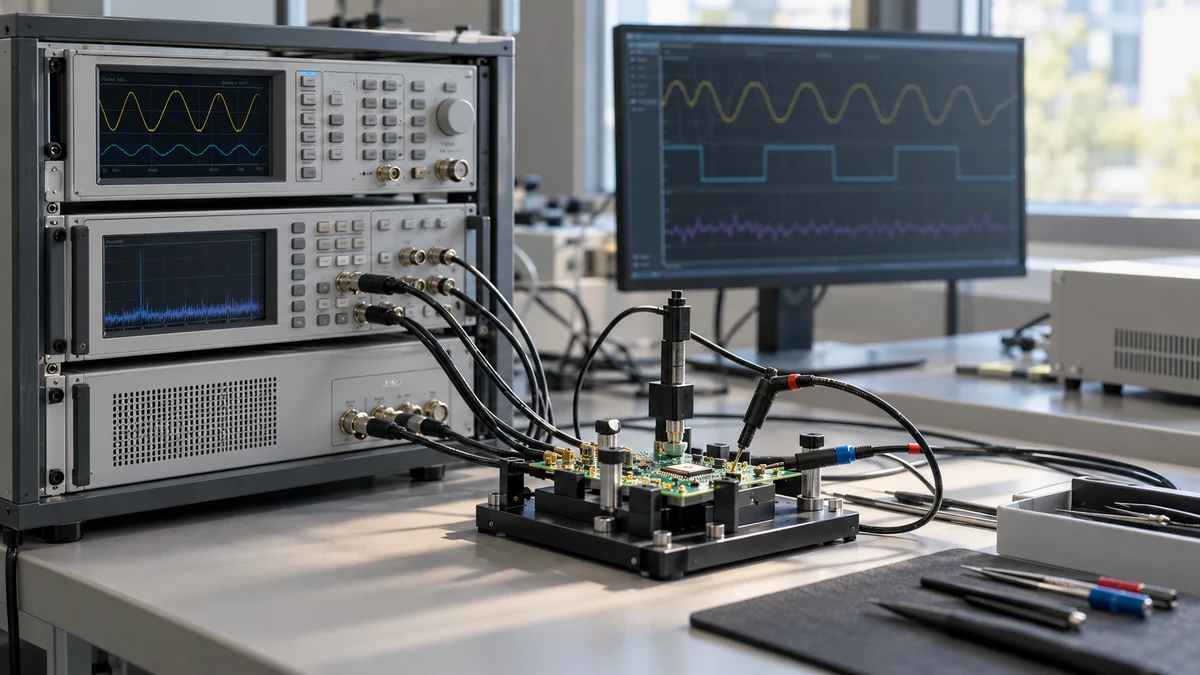
At NI Connect in Fort Worth in April 2025, Emerson expanded its data-acquisition range with NI FieldDAQ for extreme environments, USB-C CompactDAQ chassis and a new connector for C Series modules. The NI PXIe-5842 Vector Signal Transceiver received a 4 GHz bandwidth option. Emerson also offered spectrum stitching across two third-generation transceivers, providing up to 7 GHz of instantaneous bandwidth. Software announcements included a base version of SystemLink and support for third-party signal sources in InstrumentStudio through custom plugins.
LabVIEW updates addressed debugging, wire and probe workflows, and comparison of virtual instruments. Additional development capabilities included:
- support for .NET 8.0 and Python 3.12;
- connections to Docker containers;
- an open-source repository for FlexLogger plugins;
- LabVIEW Community Edition on macOS for university students.
Emerson also announced support for more than 80 user groups worldwide. More than a dozen suggestions submitted through the Ideas Exchange portal had been implemented in product updates. The conference combined product demonstrations, technical panels and academic research presentations.
Nigel AI Advisor reached the test software suite
By Jul 22, 2025, Emerson had enabled Nigel AI Advisor in NI LabVIEW and NI TestStand. The assistant used large language models adapted to understand NI software. Its functions included analysing code, recommending changes during test development and execution, and responding to plain-language questions about software functions. Emerson supplied the assistant through a secure cloud platform and described protection of user data as part of its design. The applications served engineers working in semiconductor, transportation and electronics testing.
Both LabVIEW and TestStand belonged to the NI LabVIEW+ Suite, alongside other tools for automating measurements, analysis and tests. Nigel had first been introduced to attendees at NI Connect before its July availability. Emerson planned further integration into other test software products, while continuing to refine the technology for test and measurement tasks. The company expected the assistant to help engineers use the existing tools more efficiently; wider integration remained a development plan at the time of the July announcement.
Battery testing through a venture investment
Emerson Ventures invested in EECOMOBILITY in November 2024. The startup originated at McMaster University's Centre for Mechatronics and Hybrid Technology and developed AI-based battery testing and monitoring software. Its EECOPower product line addressed rapid testing and characterisation of lithium-ion cells and modules used in battery-pack production. The technology could be applied at cell, module or pack level to identify defects associated with potential fires or performance problems. Target markets included electric vehicles, energy storage and industrial applications.
EECOMOBILITY offered platform-agnostic software for standalone use or integration into customer systems, regardless of the underlying cloud or hardware infrastructure. Emerson Ventures planned to co-invest with Automotive Ventures, RISC Capital and an unnamed North American original equipment manufacturer. The investment amount was undisclosed. Emerson anticipated collaboration with its Test & Measurement business, including work related to high-volume battery-production testing. EECOMOBILITY expected the investment and collaboration to support EECOPower development, partnerships and additional applications of its battery-testing technology.




















Leave a comment