
EVE Energy in Malaysia: factory phases, research and storage
EVE Energy’s Malaysian expansion links cylindrical-cell production with a storage-battery base, university research and local energy projects.
EVE Energy’s second manufacturing phase in Malaysia was planned around energy storage batteries and local supply-chain development. The Malaysian Investment Development Authority, MIDA, expected the expansion to create more than 1,000 jobs. The expansion agreement with Invest Kedah was signed on March 16, 2025, by its chief operating officer Noor Ikhsan Abdul Aziz and EVE Energy president Liu Jian Hua.
MIDA chief executive Sikh Shamsul Ibrahim Sikh Abdul Majid said cooperation with Malaysian suppliers would support a local battery-manufacturing ecosystem. He expected international suppliers to bring technical expertise and mentoring opportunities. Investment, Trade and Industry Minister Tengku Zafrul welcomed the initiative as aligned with the New Industrial Master Plan 2030, National Automotive Policy and National Energy Transition Roadmap.

Two manufacturing phases with different products
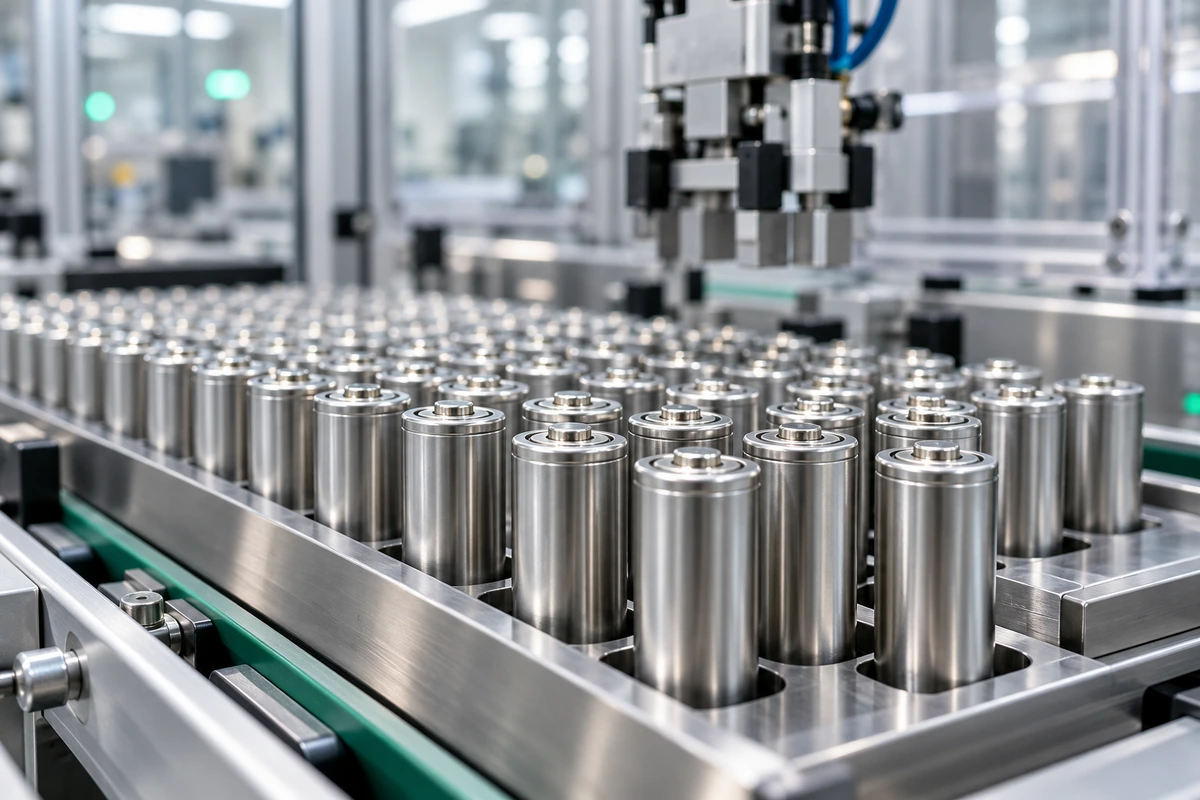
EVE’s Malaysian project already had a cylindrical-battery phase before the March 2025 expansion announcement. Construction of the International Cylindrical Battery Industry Park began on August 7, 2023. Its announced investment ceiling was US$422.3 million. The project, also called EVE’s Plant 53, was intended to produce batteries for power tools and electric two-wheelers. In a May 2024 construction update, EVE expected operations to begin in the first quarter of 2025.
The storage phase had its own earlier land and company plans. On January 15, 2024, EVE Energy Malaysia and Invest Kedah signed a memorandum in Huizhou. It proposed establishing an energy storage company and buying another plot for Phase II. The two phases therefore covered cylindrical cells for tools and two-wheelers, and a separate energy storage manufacturing project.
The first factory’s launch and production start
The Padang Meha facility in Kedah held its inauguration on December 16, 2024. EVE and MIDA identified Southeast Asia, Europe and North America as intended customer markets for its power-tool and two-wheeler batteries. They expected the fully operational facility to employ 2,000 Malaysians, mostly with technical backgrounds. That employment projection accompanied the first factory’s launch. Operations were still expected to commence in the first quarter of 2025.

Senior vice president Vincent Wong said construction had taken 16 months from the August 2023 groundbreaking. At the ceremony, EVE signed strategic cooperation agreements with Greenworks, Chervon and JTI. Co-founder and chief executive Liu Jianhua connected the project with closer cooperation between the two countries and stronger overseas delivery capabilities. The event brought together company executives, MIDA representatives, Kedah officials and Huizhou deputy mayor Li Junling.
The first battery rolled off the Malaysian production line on February 16, 2025, marking the start of operations at EVE’s first overseas factory. The plant produced 21700 cylindrical cells for power tools and electric two-wheelers. EVE reported annual production capacity of 680 million cells, a manufacturing-capacity measure rather than a disclosed annual shipment total. The factory was located in Kulim district, Kedah, and identified as the company’s 53rd factory.
Phase II moves from construction to ramp-up
On January 26, 2026, EVE Energy Malaysia held the Phase II factory launch and a Plant 58 plaque-presentation ceremony. President Liu JianHua officiated. Managing director He YingShen attended with the local management team, while government participants included Kedah industry and investment representative Haim Hilman and MIDA deputy chief executive Zuaida. More than 60 guests and representatives from 15 government agencies attended. EVE described the project as moving from construction toward scaled-up production and operational management.

Research and training partnerships in Malaysia
University cooperation developed alongside the manufacturing projects. On August 7, 2025, EVE Energy Malaysia and Universiti Malaya signed a memorandum and opened a joint laboratory at EVE’s premises. Managing director He YingShen and the university’s Faculty of Science dean, Professor Dr Saiful, took part in the signing and unveiling. The university delegation toured the testing centre and Plant 53’s production line. Their partnership targeted new-energy and battery research, talent development and commercialisation of innovations through collaboration between industry and academia.
A separate letter of intent with UniKL
EVE announced another university arrangement on September 3, 2025, through a letter of intent with Universiti Kuala Lumpur, or UniKL. Invest Kedah coordinated the collaboration, with state-government facilitation. The proposed work covered talent development, industrial training, technology transfer and quality improvement. A teaching-factory approach formed part of the cooperation plans. The partners also intended to support academic exchange and the transfer of research results into industrial use. They linked those objectives to Kedah’s electrical and electronics industry and energy storage value chains, including the development of local suppliers.
State and federal investment coordination
Kedah chief minister Muhammad Sanusi bin Md Nor visited EVE Energy Malaysia on November 4, 2025. The delegation included the state economic planning division, Invest Kedah, the Kulim district and land office, and the municipal council. Chairman Liu JinCheng, local managing director He YingShen and the management team received them. Discussions covered investment implementation, supply-chain cooperation, quality and safety standards, low-carbon development and local talent cultivation.

EVE set out plans to develop Kedah as a base for manufacturing and innovation. Its priorities included digital quality management, intelligent manufacturing and lower-carbon factory operations. The company also proposed an open platform involving government and industrial partners, with further technology deployment and artificial-intelligence applications in manufacturing. The chief minister encouraged deeper localisation and the development of a more resilient new-energy industry in the state.
He YingShen met MIDA chief executive Sikh Shamsul Ibrahim Sikh Abdul Majid in Kuala Lumpur on December 3, 2025. He thanked the authority for supporting completion of the first- and second-phase projects. Their discussions concerned the development of overseas projects, EVE’s operations in Malaysia and further cooperation with government agencies. EVE intended to use the Malaysian base to serve international customers with lithium-battery technology. The meeting preceded the second factory’s January 2026 launch ceremony.
A solar-storage project at the Malaysian base
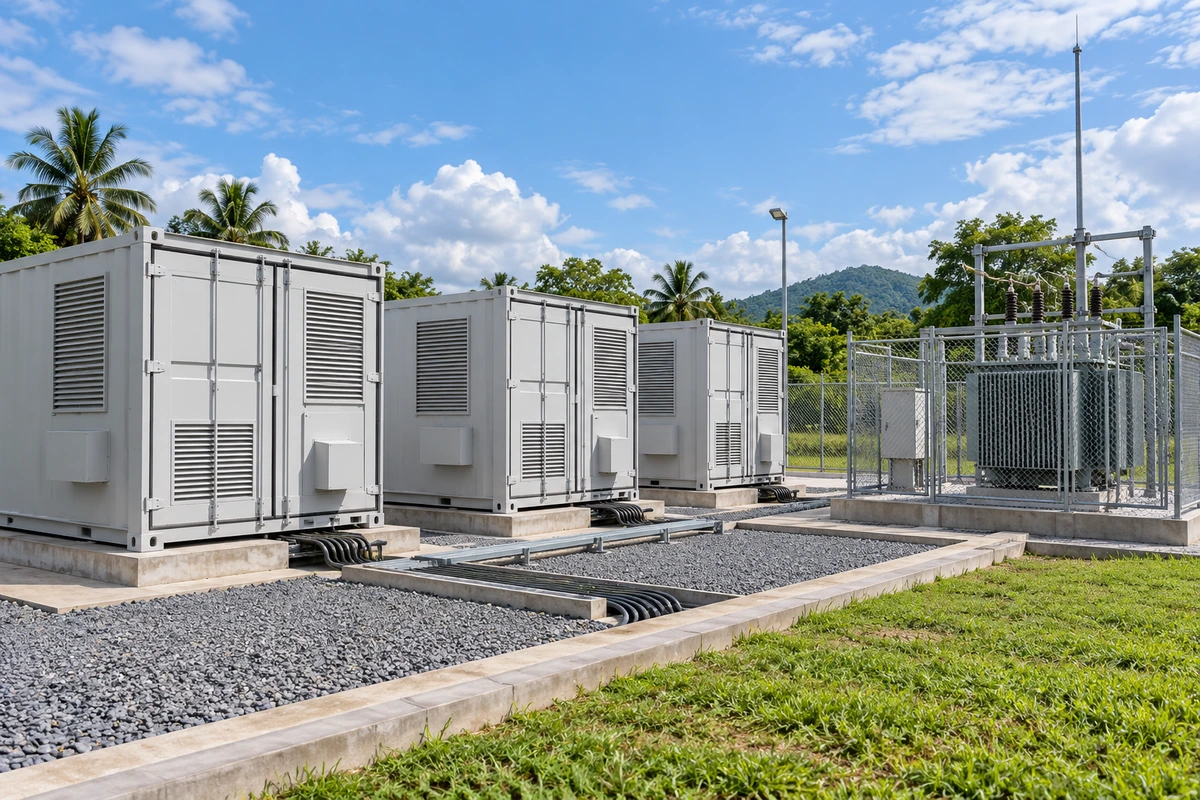
Construction of a 25MWp solar-storage project began on July 9, 2026, with support from Tenaga Nasional Berhad and its subsidiary GSPARX. EVE’s announcement scheduled full commissioning for October 15, 2026. The project combined planned solar generation with storage technology and local operational capabilities. Its stated capacity was a solar peak-power rating.

At Tenaga Nasional Berhad’s Energy Transition Conference in June 2026, EVE and TNB, through GSPARX, agreed to collaborate on photovoltaic and battery energy storage projects. GSPARX subsequently outlined a 40MWp rooftop solar programme for the Kedah manufacturing hub. Its first solar phase covered 25MWp, with another 15MWp planned for the second. The proposed storage equipment used EVE’s Mr. Big Family series. GSPARX described an outright-purchase model for the solar project.
EVE was to act as a hybrid engineering, procurement, construction and commissioning partner, handling engineering, installation and commissioning. GSPARX would manage procurement of major equipment. Managing director Sansubari Che Mud linked the collaboration with greater control over quality and technology and more competitive solar packages. EVE Malaysia deputy general manager Fiona Hu also described artificial-intelligence applications in the manufacturing process: identifying machine-maintenance requirements, detecting defects and optimising chemical curing times.
The energy storage product portfolio
At the BNEF summit in Shanghai in late 2025, strategic marketing general manager Wendy Yip presented EVE’s large-cell and system portfolio. It included the 628Ah Mr. Big battery, 836kWh modular cabinets and 6.9MWh containerised systems. Those specifications referred to different levels of equipment, from an individual cell to integrated storage installations. EVE also identified its Jingmen 60GWh factory as part of its manufacturing network.

Yip described international expansion as a central part of the company’s strategy, supported by local manufacturing, cooperation and service. EVE had developed product certifications and commercial channels across North America, Europe and Asia-Pacific. She expected emerging markets in Asia, Africa and Latin America to contribute to storage demand and projected greater adoption of cells above 500Ah. These were company expectations about market development alongside its existing product offerings.
Cells, integrated systems and commercial models
EVE presented storage products at the March 2025 CIES exhibition in Hangzhou, China. Senior vice president Chen Xiang described a business extending from cells into complete storage products and solutions. EVE had announced mass production of its 628Ah cells on December 10, 2024. Its portfolio included the Mr. Giant system and a high-voltage, stackable residential storage product. The company specified a 0.21-square-metre footprint for the modular residential system and promoted installation flexibility and scalability.
For commercial and industrial storage, EVE offered several business arrangements:
- energy performance contracting;
- direct investment by the customer;
- equipment leasing;
- build-operate-transfer projects.
The company paired those models with its product and service offering for distributed storage. Chen said EVE intended to develop an ecosystem with partners and to use research and product development to address different customer requirements. Its residential approach emphasised customised development and service as well as modular equipment.
Local manufacturing within a wider service network
EVE described another part of its international network at a September 2025 industry conference in Munich. EVE Germany managing director Richard Zhang identified six delivery and vendor-managed-inventory hubs serving more than 500 European customers. The offering extended from cells and modules to battery packs and energy storage containers. A planned factory in Hungary formed part of its European localisation programme. The network combined manufacturing plans with customer supply and service functions.
EVE had announced plans in June 2023 to invest more than US$1 billion in an electric-vehicle battery factory in Debrecen. The planned construction period was four years. That proposal concerned automotive batteries; the Malaysian first plant was focused on power tools and electric two-wheelers.
EVE also signed a memorandum with the University of Debrecen and Wuhan University concerning development of the lithium-battery industry. Zhang described work on manufacturing processes, product and packaging design, renewable energy and recycling across battery lifecycles. The company had completed carbon-footprint calculations for more than 40 products and launched its Cradle to Cradle recycling initiative. The carbon-footprint calculations were a group-wide product programme.
Large-cell development and new application areas
At a December 2025 storage conference in Shenzhen, senior vice president Steven Chen said EVE had entered energy storage in 2015 and reached cumulative shipments of 150GWh. That was a company-wide cumulative figure. He expected production of 628Ah Mr. Big cells to reach 750,000 units by the end of December. EVE also planned a 588Ah cell within the same product family, intended to provide another option for storage customers.
The company was preparing data-centre power solutions covering grid-connected and off-grid stations, uninterruptible power supplies, 800V direct-current systems and 48V distributed power. Those application areas extended its development programme beyond a single battery format. EVE described in-house research across the technology chain as supporting its approach.

An airport storage contract in Malaysia
On January 29, 2026, EVE and its partners signed a solar-plus-storage contract for Kuala Lumpur International Airport. EVE international storage sales general manager Oscar Chan and Cenergi SEA president En Harman presented the procurement contract, with deputy prime minister Fadillah Yusof attending. The project brought EVE’s 628Ah battery technology and integrated storage offering into a Malaysian airport infrastructure programme. EVE announced the agreement on February 6.
The company described a 10MW/36MWh project alongside a 36MWp solar farm, with operation targeted for 2027. It also identified its 5MWh storage-system platform within the equipment offering. Planned applications included renewable-power integration, peak shaving and grid-frequency regulation. The terminal’s supply of green power was an intended operational outcome.
A completed first phase in utility-scale storage
EVE’s storage projects also included the shared facility in Luliang county, Qujing, developed with SPIC Yunnan International. Its first phase connected to the grid on April 29, 2025, with 200MW/400MWh of capacity. The overall scheme was designed for 500MW/1,000MWh. Luliang Dianneng Power, a subsidiary of SPIC Yunnan International, developed and operated the project. The two sets of ratings distinguished the completed first phase from the larger scheme.
EVE supplied 40 units rated at 5MW/10MWh each for the first phase. The company reported installation and commissioning within a week of equipment arrival. The design lifespan was 20 years. The station was intended to support regional power allocation and peak-valley electricity management, alongside renewable-energy integration.
Engineering work from cells to power electronics
In February 2026, EVE opened a Power Electronics Lab at its Energy Storage Institute in Wuhan. The facility combined research, testing and prototyping functions across multiple power levels. Its engineering programme covered boards and complete systems, hardware and software, and simulation and physical testing. Chairman Liu Jincheng identified in-house power-conversion-system research as a priority for grid-forming storage technology. The Wuhan facility was separate from the joint university laboratory opened at the Malaysian premises.
At the laboratory event, EVE signed technology cooperation agreements with Shenzhen MEGMEET Electrical and Ningbo AUX Intelligent Technology. Their proposed work included joint research in power electronics, system integration and shared testing resources. EVE intended the laboratory to provide an iterative engineering and validation platform for system-level storage development. That programme added power electronics and control to the company’s work on materials, electrochemistry, cells and integrated storage equipment. MEGMEET chairman Tong Yongsheng and AUX Intelligent power-distribution executive president Wu Xiaoli attended the ceremony and delivered remarks.




















Leave a comment