
FLSmidth’s cement sale and the transition to mining technology and services
FLSmidth’s cement sale reshaped its portfolio. The agreement, mining investments and subsequent results trace the company’s transition to a focused supplier.
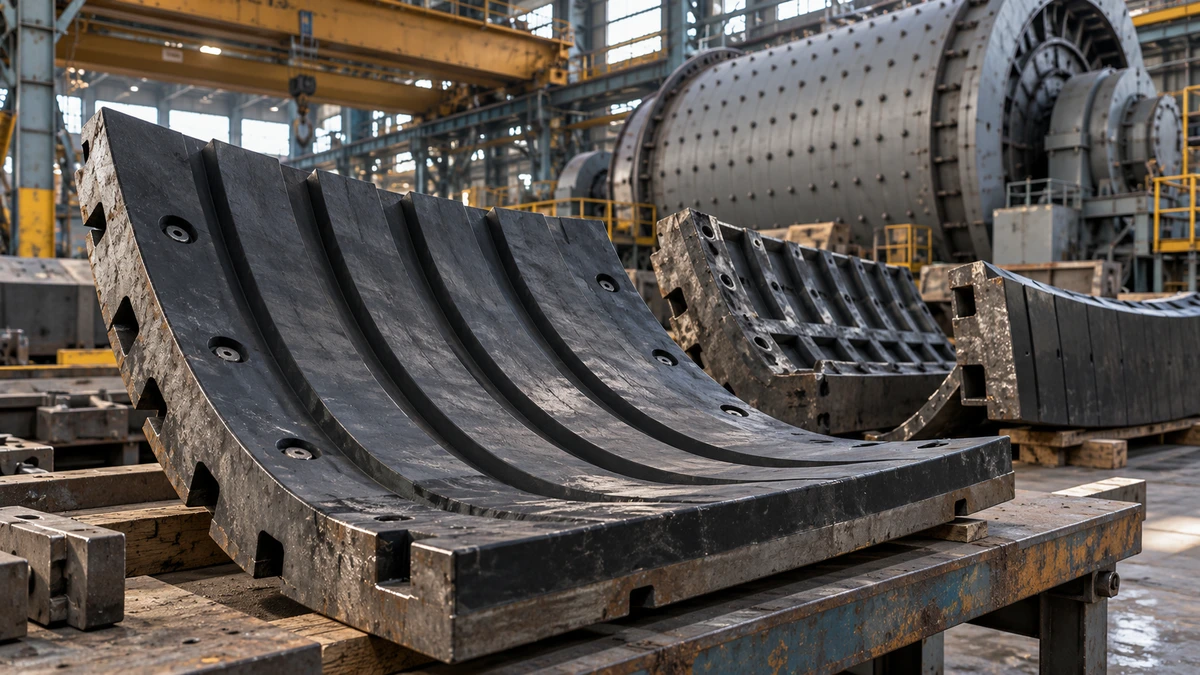
FLSmidth’s agreement to sell its cement business lifted its shares by 7% on 20th June 2025, alongside the announcement of a buyback of up to DKK 1.4 billion. At 10:56 GMT, the shares stood at their highest level since August 2018 and ranked second among the STOXX 600’s performers. The intraday move put them on course for their strongest day since May. FLSmidth and Pacific Avenue Capital Partners had been negotiating exclusively since May. The Danish company retained its mining outlook of around DKK 15 billion in annual revenue and a 14–14.5% adjusted EBITA margin while removing cement from its continuing-business guidance.
A conditional agreement to separate cement
FLSmidth agreed to transfer the cement business to a Pacific Avenue affiliate for an initial enterprise value of €75 million, approximately DKK 550 million. A further payment of up to €75 million depended on undisclosed objectives. Final adjustments, debt-like items and transaction costs meant FLSmidth expected only a limited net cash gain from the initial transaction. The sale agreement covered employees, assets, intellectual property and technology; certain legacy contracts and Air Pollution Control remained outside it. Closing was expected in the second half of 2025, subject to customary conditions and regulatory approval. Cement would become discontinued operations, with an approximately DKK 700 million noncash impairment expected in the second quarter. Chair Mads Nipper supported separate development of both businesses. Buyer partner Jason Leach identified Fuller, Pfister and Ventomatic among the cement brands and expressed confidence in innovation’s role in cement decarbonisation.

The strategies behind the separation
FLSmidth introduced separate mining and cement strategies at its Capital Markets Day on 18th January 2023. CORE’26 organised the mining business around sustainability, service, technology and performance. Its service priority concerned equipment performance throughout its operating life, while the technology priority covered process and product technologies. Performance initiatives included concentrating on core activities, simplifying operations and balancing risk. Cement’s GREEN’26 programme had three different priorities: changing its operating model, developing its service business and advancing offerings for the industry’s green transition. The company set 2026 EBITA margin targets of 13–15% for mining and approximately 8% for cement. Its capital priorities included a strong balance sheet, growth investment and acquisitions intended to add value. A leverage target below two times net interest-bearing debt to EBITDA and a dividend payout of 30–50% of net profit remained in place. Excess cash could be returned through extraordinary dividends or buybacks.
A new company structure was in place by 1st January 2024. On 29th January, FLSmidth began exploring cement divestment options, with the remaining separation activities expected to finish during the first half of that year. Management identified limited overlap between the businesses’ customers and products, alongside different market conditions. The board had considered alternative operating models, investment scenarios and ownership arrangements. Then-chair Tom Knutzen argued that cement required substantial investment and dedicated management attention that another owner could provide more easily. CEO Mikko Keto supported strengthening the mining business while allowing cement to develop separately. At that stage, a transaction was uncertain and could occur no earlier than late 2024. Cement’s leadership and operations continued under GREEN’26 while the ownership review proceeded. The exploration announcement left the existing financial guidance and both businesses’ 2026 margin targets unchanged.
Integrating the acquired mining business
FLSmidth had acquired the former thyssenkrupp Mining business, subsequently called Mining Technologies, on 31st August 2022. By 29th January 2024, integration was largely complete. The company raised its expected annual cost synergies to approximately DKK 600 million, above the previous DKK 560 million target. It expected the full annual benefit to appear in 2024 results and thereafter; approximately DKK 200 million had been realised in 2023. Total integration costs reached DKK 733 million, below the earlier estimate of around DKK 800 million. These figures accompanied preliminary, unaudited 2023 results, with audited results scheduled for 21st February 2024. Management’s 2024 outlook also incorporated inflation in the cost base and reinvestment of some savings into commercial activities supporting CORE’26. The noncore segment remained subject to backlog execution and negotiations to reduce the scope of outstanding contracts.
The operating portfolio before the sale
During 2024, mining service orders increased by 2%, while mining product orders fell by 23%. Demand for consumables and equipment upgrades supported services; hesitation over large capital investments affected products. Services represented 73% of mining orders, compared with 67% in 2023. Three large product orders announced during the year had a combined value of approximately DKK 1 billion. Mining’s full-year adjusted EBITA margin reached 13.1%, excluding DKK 191 million in transformation and separation costs. Cement orders declined by 22%, reflecting divestments and reductions in the product range. Cement’s adjusted EBITA margin reached 9.1%, excluding DKK 71 million in transformation and separation costs. Meanwhile, the noncore backlog fell to DKK 211 million at year-end, approximately 94% below its level when that segment was established in late 2022. These were the businesses’ pre-sale reporting categories; later continuing-operation comparisons used a revised perimeter.

Capital returns and the Copenhagen property
The buyback announced on 20th June 2025 was FLSmidth’s first since 2012. Its scheduled starting date was 25th June 2025, with completion no later than 20th March 2026. The programme permitted purchases of up to 4.6 million shares, approximately 8% of share capital, within the DKK 1.4 billion spending ceiling. BNP Paribas would make trading decisions independently. FLSmidth intended to adjust its capital structure and cover obligations under employee share incentives; other repurchased shares were intended for a subsequent cancellation proposal at a general meeting. The company could suspend purchases at any time. Before the programme, it held 567,002 treasury shares, approximately 0.98% of share capital. Management connected the capital return with portfolio changes and stronger financial performance, while retaining an ambition to invest in growth. These were programme authorisations and intended uses, rather than a statement that all permitted purchases had already occurred.
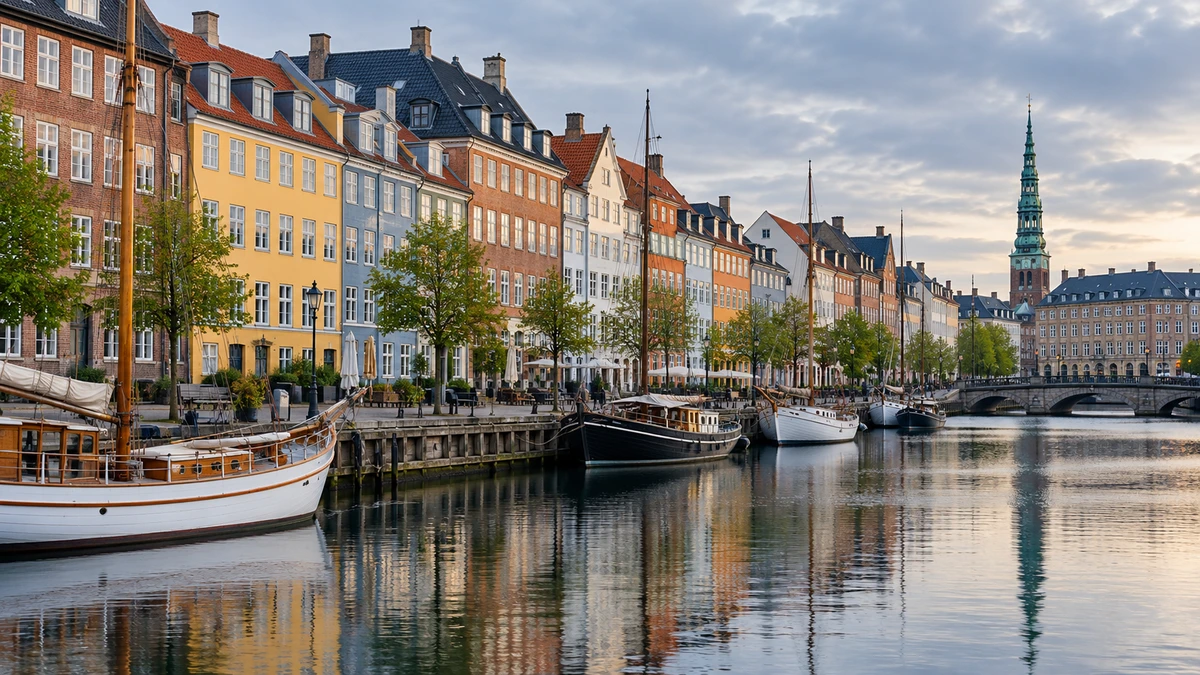
A separate agreement on 17th June 2025 concerned the Copenhagen headquarters. Nrep and AG Gruppen agreed to acquire all shares in Matr. No 2055 A/S, the subsidiary owning land and buildings at Vigerslev Allé 77 in Valby, Denmark. FLSmidth had occupied the location since 1899. Its red-brick headquarters, designed by Palle Suenson, opened in 1956. A move to Havneholmen in Copenhagen had been announced in 2022 and was scheduled for late 2025. The property agreement anticipated approximately DKK 730 million in net cash proceeds and an accounting gain of approximately DKK 690 million. Payment was expected at closing, then forecast for the end of the first quarter of 2026 after relocation. Approval from the Danish Consumer and Competition Authority remained a condition. The company earmarked the proceeds for its general capital-allocation priorities and corporate purposes.
Building service capacity around mine customers
FLSmidth’s 19th February 2025 expansion plan covered seven service centres. New locations were planned for Accra in Ghana, Surabaja in Indonesia and Dammam in Saudi Arabia. Mackay’s operations in Australia would move to larger premises. Existing facilities in Parauapebas, Brazil; Karaganda, Kazakhstan; and Ulaanbaatar, Mongolia, would expand. A further expansion at Chloorkop, South Africa, was already under way and scheduled for completion in 2026. Christian Fabry, head of professional services, described the centres as equipment workshops that could also warehouse parts. He expected proximity to mines and greater local parts availability to shorten customer downtime. The service portfolio included:
- Original-equipment spare parts and consumables held near customers.
- Field engineers and remote equipment-health and performance services.
- Mineralogical and metallurgical testing in mineral laboratories.
- Equipment upgrades, rebuilds and exchange services.
A mill-liner recycling service launched in Chile on 10th April 2025 added an end-of-life offering for rubber and composite liners. The initial service covered South American customers, with wider geographic expansion planned for a later stage. FLS developed a portable, modular and scalable recycling machine capable of handling different liner shapes, sizes and types. The service also offered customers emissions documentation for environmental reporting and an alternative to storing used liners at mine sites. Alanas Kraujalis, head of consumables, said recycling composite liners could save up to 61% in carbon emissions compared with producing liners from virgin materials. That percentage was a company comparison with a specified production baseline, rather than a measured reduction across the whole mining business. FLS placed the offering within its MissionZero programme and its responsibility for the end-of-life phase of these products.

Manufacturing liners in Chile and South Africa
Four days later, on 14th April 2025, FLS inaugurated a mill-liner manufacturing facility in Casablanca, Chile. Investment exceeded DKK 160 million. The 11,250-square-metre facility brought engineering, innovation, planning and manufacturing into one location, with capacity for up to 6,500 tons of coatings annually. FLS described the LEED-certified site as operating with renewable energy and recycling and reusing all water employed in manufacturing. The company put the manufacturing-process emissions reduction at up to 56%; the announcement did not supply a comparison baseline for that figure. It also anticipated up to 250 new jobs in the Valparaíso region. Mikko Keto linked the investment to the company’s mill-lining portfolio and South American communities. The plant’s inauguration was a completed event, while its annual capacity and potential employment were stated operating capabilities and projections.
On 2nd June 2025, FLS acquired Scott Specialized Rubber & Engineering in Pretoria, South Africa. SSRE manufactured heavy-duty rubber products for several industries, including mineral processing. FLS intended the acquisition to support service growth under CORE’26 and address regional capacity constraints in mill liners. The transaction terms were undisclosed, and the announcement did not alter the company’s 2025 guidance. Alanas Kraujalis described a move from outsourced supply towards dedicated regional capacity for rubber and composite mill liners. He expected local manufacturing to improve control and responsiveness, shorten lead times and strengthen aftermarket support across Africa. FLS’s wider liner portfolio comprised steel, rubber and composite options. The acquisition added a manufacturing business to that portfolio; the projected service improvements remained management expectations. FLS positioned the investment alongside its role supplying milling equipment, engineering and services for mining customers.
APC followed a separate disposal process
The Air Pollution Control business, initially retained outside the cement transaction, had its own buyer by 30th June 2025. FLSmidth signed an agreement to sell APC to Rubicon Partners, an investment partnership focused on complex industrial businesses. The agreement included assets, intellectual property, technology, employees and the order backlog. Closing was expected during the second half of 2025. FLSmidth anticipated a small net gain recognised within discontinued operations, and its previously communicated full-year guidance remained unchanged. The company had gradually sold air-pollution-control businesses since 2020; this agreement concluded that divestment process. Rubicon’s investment scope covered manufacturing, distribution and services businesses in the United Kingdom and Europe. The partnership described experience with corporate carve-outs as well as privately owned companies. APC’s separate sale agreement therefore followed its exclusion from the Pacific Avenue transaction, rather than adding APC to that original sale.
Later reporting and completion of the cement sale
From the second quarter of 2025, FLSmidth divided continuing operations into Service, Products, and Pumps, Cyclones & Valves. The revised segments followed the agreements to dispose of cement and APC. PC&V was expected to comprise approximately 25% equipment orders and 75% aftermarket orders on average. In the second quarter, consolidated order intake rose by 3% year on year, while revenue fell by 12%. The adjusted EBITA margin reached 15.2%, excluding DKK 50 million in transformation and separation costs and DKK 59 million in other operating net income. The company’s 20th August interim results retained guidance revised on 14th August: revenue of DKK 14.5–15 billion and an adjusted EBITA margin of 15–15.5%. The revenue revision reflected customer-driven delays to some product orders and adverse exchange-rate movements. The continuing-business comparisons incorporated restated 2024 figures, including noncore activities, rather than the earlier combined mining-and-cement group.

FLSmidth completed the sale of cement to the Pacific Avenue affiliate on 31st October 2025. The closing confirmation followed an announcement on 21st October. Completion did not change the company’s previously announced full-year 2025 financial guidance.
FLSmidth’s 2025 annual results, approved on 18th February 2026, recorded revenue of DKK 14.612 billion and an adjusted EBITA margin of 15.9%. Revenue declined by 7% on a reported basis and 1% organically. Orders decreased by 2% as reported but grew by 3% organically, supported by Service and PC&V. Net profit was DKK 8 million, compared with DKK 1.03 billion in 2024. The decline included a DKK 600 million impairment of Danish deferred tax assets and a DKK 706 million loss from discontinued cement and related activities. Operating cash flow increased to DKK 996 million from DKK 640 million. CEO Toni Laaksonen characterised 2025 as the completion of the transition to a focused mining technology and services business. His stated priorities for 2026 included expanding the market position, improving the customer offering and strengthening Products as the timing of major mining projects remained uncertain.
A planned service centre in Central Asia
On 17th March 2026, FLS announced a joint venture with Texnopark, a local industrial company in Uzbekistan. The partners intended to establish a service centre, subject to continuing discussions with local customers. The proposed centre would develop in phases, using a modular setup that could expand as additional mines entered operation. Its intended services included maintenance at customer sites, technical support, spare-parts management and digital solutions. Financial terms were not disclosed. Toni Laaksonen described the partnership as a way to bring FLS closer to customers and develop its Central Asian presence. He expressed confidence in Uzbekistan’s mining prospects, rather than announcing completed centre operations. The venture concerned a prospective local service capability within the mining-focused company, following the separate cement ownership and the manufacturing and aftermarket investments made during its transition.




















Leave a comment