
GE’s three-way separation: aerospace, energy and healthcare take independent paths
GE completed its three-way separation in April 2024. The spin-offs, factory investment and healthcare acquisitions trace the independent businesses’ development.
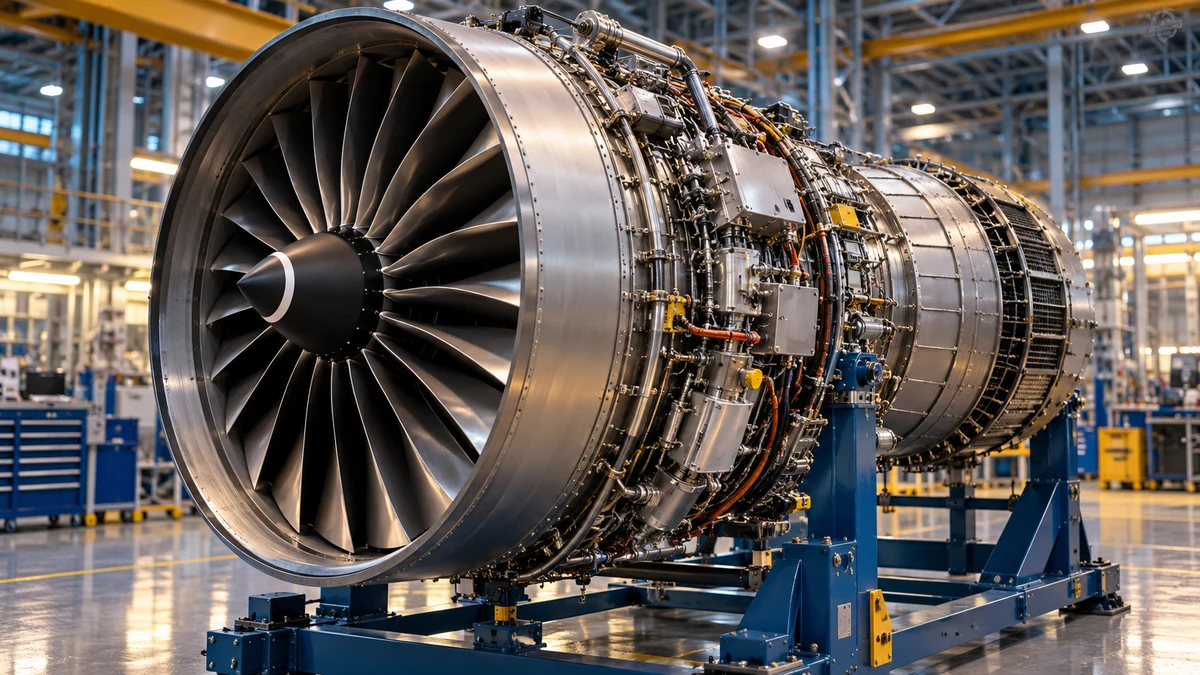
GE completed its three-way separation on 2nd April 2024, ending the structure of a 132-year-old conglomerate. Thomas Alva Edison’s Edison General Electric had merged with a rival in 1892; the resulting group eventually spanned electricity, appliances and mortgages. GE Capital nearly bankrupted it during the 2008 financial crisis. Larry Culp became its first outside chief executive in 2018 after weak profits and mounting debt. The pandemic subsequently hit the aircraft-engine business as air travel collapsed. Asset sales, lower debt and overhead reductions accompanied the turnaround: debt fell by more than $100 billion from 2018 and free cash flow quadrupled. Culp and GE Vernova chief executive Scott Strazik rang the New York Stock Exchange’s opening bell as aerospace and energy began their separate trading histories.
The financial baseline before the final split
GE entered the separation year after reporting $68 billion in revenue for 2023, a 17% increase, and $79.2 billion in orders, up 25%. Cash from operating activities reached $5.6 billion, while the company’s non-GAAP free cash flow measure reached $5.2 billion, an increase of $2.1 billion. Its adjusted profit margin was 8.8%. Fourth-quarter revenue was $19.4 billion and operating cash flow was $3.2 billion. The aerospace business increased LEAP engine deliveries by 38% during the year. Commercial services supported its earnings, while equipment volumes also rose in the final quarter. Renewable Energy’s fourth-quarter organic orders increased 1%, with onshore growth partly offset by cancellation of a large offshore order originally booked in the second quarter. Power’s quarterly organic revenue rose 12%, driven by Gas Power, and profit exceeded $750 million. GE also completed the sale of its remaining AerCap equity holding, receiving approximately $2 billion during the fourth quarter. Its January 2024 guidance incorporated the standalone and other costs that Aerospace and Vernova would incur separately.
HealthCare’s earlier departure
GE announced the completed separation of GE HealthCare Technologies on 4th January 2023. The healthcare company began trading that day on Nasdaq under GEHC, while the parent retained its GE listing on the New York Stock Exchange. Existing GE shareholders received one HealthCare share for every three GE shares held. GE initially retained approximately 19.9% of HealthCare’s common stock, and Culp became its non-executive chairman. The distribution formed part of a spin-off structured to be tax-free for shareholders in the United States. At that stage, Aerospace and Vernova were still preparing for independent launches in early 2024. GE’s planned energy portfolio encompassed Renewable Energy, Power, Digital and Energy Financial Services. Paul, Weiss, Rifkind, Wharton & Garrison acted as legal counsel for the healthcare separation. Evercore, Morgan Stanley and PJT Partners were the lead financial advisers. Other advisers included Gibson, Dunn & Crutcher and DLA Piper on legal matters, alongside BofA Securities, Citibank and Goldman Sachs on financial matters. The healthcare listing preceded the final aerospace-energy separation by more than a year.
The board’s timetable and share distribution
GE’s board formally approved the Vernova spin-off on 29th February 2024, setting 2nd April as the launch date for both independent businesses. The distribution entitled shareholders recorded on 19th March to one Vernova share for every four GE shares. Shareholders would retain their existing GE shares as Aerospace shares. Receiving the new Vernova shares and continuing to hold Aerospace required no action from those shareholders. The approved separation timetable distinguished preliminary trading from the completed transaction:
- Vernova’s when-issued trading was scheduled to start on 27th March.
- GE’s ex-distribution trading would start on the same date, ahead of its identity as Aerospace.
- The spin-off was scheduled before the market opened on 2nd April, with Vernova trading under GEV and Aerospace retaining GE.
GE directed pre-completion traders to their intermediary for distribution details. Separate investor meetings on 6th and 7th March gave Vernova and Aerospace management teams their own platforms to discuss strategy, technologies and financial outlooks before the launches.

Aerospace’s engines, services and capital priorities
GE Aerospace approached independence with approximately 44,000 commercial aircraft engines and 26,000 military aircraft engines in its installed base. Its workforce numbered about 52,000. The business combined propulsion, services and systems, serving narrowbody and widebody aircraft as well as rotorcraft and combat platforms. At its 7th March 2024 investor meeting, Culp presented FLIGHT DECK, the company’s lean operating model, as the foundation for its operational priorities. Aerospace forecast approximately $10 billion in operating profit in 2028, a forward-looking non-GAAP measure. Its capital framework combined research, development and capital expenditure with selective acquisitions and shareholder distributions. Management intended to return approximately 70–75% of available funds through dividends and buybacks. An initial dividend payout of 30% of net income remained subject to board approval, alongside a $15 billion share-buyback authorisation. A post-spin pro forma cash balance of $13 billion supported the framework. Other identified funding sources included free cash flow and future monetisation of the AerCap note and remaining HealthCare equity. Aerospace described its acquisition approach as disciplined, with strategic, operational and financial synergies among the criteria.
Vernova’s energy businesses and management
GE Vernova organised its standalone business around Power, Wind and Electrification. Its 6th March 2024 investor meeting brought together chief executive Scott Strazik, non-executive chairman Steve Angel and chief financial officer Ken Parks. The wider leadership included Maví Zingoni at Power, Vic Abate at Wind, Philippe Piron at Electrification Systems and Scott Reese at Electrification Software. President Jessica Uhl and chief sustainability officer Roger Martella also participated. Advanced Research, Consulting Services and Financial Services supported the core businesses. Vernova planned annual research and development investment of $1 billion and introduced a sustainability framework with four pillars: electrify, decarbonise, conserve and thrive. A lean operating system accompanied its plans for disciplined growth and margin improvement. Its capital priorities covered organic investment, shareholder returns and possible inorganic growth while maintaining an investment-grade credit rating. The company’s headquarters were in Cambridge, Massachusetts, and its March profile placed more than 80,000 employees across over 100 countries. Strazik described the energy transition as a major investment cycle and identified the installed equipment base, recurring services revenue and order backlog as important elements of Vernova’s strategy.

An independent energy company’s starting scale
Vernova completed its separation before the market opened on 2nd April 2024. Its installed equipment included more than 7,000 gas turbines and approximately 55,000 wind turbines. At launch, the company estimated that its technologies helped generate around 30% of the world’s electricity. Customers included utilities, project developers, governments and large industrial electricity users. The portfolio covered generating, transferring, orchestrating, converting and storing electricity. Strazik identified Power, Wind and Electrification as the three segments supplying equipment and services to that market. Parks linked the company’s planned financial development to customer demand, contract selectivity and risk management. The launch-day outlook retained the guidance presented in March: Vernova expected mid-single-digit organic revenue growth in 2025 and a non-GAAP adjusted EBITDA margin at the low end of high single digits. Its free cash flow forecast for that year was $1.2 billion to $1.8 billion. By 2028, management targeted a 10% adjusted EBITDA margin and free cash flow conversion of 90–110% of adjusted net income. These figures were management projections at separation, rather than completed financial results.
Aerospace’s 2024 factory and supplier programme
GE Aerospace announced a $650 million manufacturing and supply-chain investment plan on 12th March 2024. Nearly $450 million was allocated to 22 company facilities across 14 states, covering machinery, inspection equipment, buildings, test cells and safety improvements. A further $100 million was intended for suppliers in the United States, with approximately $100 million for international sites in North America, Europe and India. Auburn, Alabama, was allocated $54 million for additive manufacturing equipment and tooling. Lynn, Massachusetts, was allocated $30 million for assembly, testing and facilities supporting military engines. Four North Carolina locations were assigned a combined $46 million, while facilities around Cincinnati were allocated $107 million. Supplier investment covered capabilities including castings, forgings and early-stage engine parts. The programme supported higher LEAP production, preparation for GE9X manufacturing and military customers. Aerospace also had more than 1,000 open external positions at its US factories. Supply-chain vice president Mike Kauffman connected the spending to production quality and customer demand. The factory and supplier allocations were components of the same global programme.

Pune’s production expansion and workforce training
GE Aerospace allocated $30 million of that global programme to its factory outside Pune, India. By June 2024, Pune manufactured hundreds of components for engines from the CF6 to the GE9X. The plant opened in May 2014 following a $200 million investment, with a 250,000-square-foot production area. Over its first decade, it trained more than 5,000 local engineers and operators, while output grew tenfold. Its multimodal layout allowed different products to share infrastructure and equipment. Managing director Amol Nagar oversaw a workforce development approach that included an in-house manufacturing school. A two-year apprenticeship combined classroom teaching with work alongside mentors on the factory floor. Namrata Motling, an early apprentice who became a materials planning specialist, learned computer numerical control programming and routing. Mahesh Hiremath subsequently led a safety induction programme covering subjects such as chemicals, forklifts and working at height. A separate two-year Emerging Leaders Program rotated experienced employees through management teams. Mechanical engineer Bhimashankar Dhavle completed that programme in 2019 and moved into materials and production planning.
Vernova’s investment plans after separation
On 29th January 2025, GE Vernova announced plans to invest nearly $600 million in US factories and facilities over two years, with more than 1,500 jobs expected. This was the first portion of a broader $9 billion global capital expenditure and research programme through 2028. Almost $300 million was earmarked for Gas Power capacity, supporting a previously announced target of up to 80 heavy-duty gas turbines annually and an additional 20 GW globally. Greenville, South Carolina, was allocated more than $160 million, while Schenectady, New York, was allocated over $50 million. Nearly $20 million would expand grid equipment capacity in Charleroi, Pennsylvania, and Clearwater, Florida. Other allocations included more than $50 million for the Wilmington nuclear fuel factory and nearly $100 million for onshore wind manufacturing and remanufacturing facilities. At Niskayuna, New York, Vernova planned almost $100 million in research investment during 2025, with 75 research jobs expected, and $15 million for generative AI work. These were announced investments and employment expectations; the January statement did not establish their subsequent completion.

HealthCare’s 2024 financial performance
GE HealthCare reported 2024 revenue of $19.7 billion on 13th February 2025, up 1% on both reported and organic bases. Growth in the US and Pharmaceutical Diagnostics was partly offset by weaker market conditions in China. Net income attributable to the company reached $2 billion, against $1.6 billion in 2023. Its net income margin rose from 8% to 10.1%, while the non-GAAP adjusted EBIT margin increased from 15.1% to 16.3%. Operating cash flow was $2 billion and free cash flow was $1.6 billion, both below the preceding year. Full-year organic orders increased 3% and book-to-bill was 1.05. Fourth-quarter revenue reached $5.3 billion, with organic orders up 6% and book-to-bill at 1.09. Chief executive Peter Arduini identified approximately 40 innovations and more than 50 strategic enterprise agreements during 2024. The company also entered long-term agreements with Sutter Health and Nuffield Health at the start of 2025. Its full-year results distinguished reported earnings from adjusted measures and attributed margin gains to productivity and pricing.
MIM Software joins the independent healthcare business
GE HealthCare closed its acquisition of MIM Software on 1st April 2024, less than three months after signing the purchase agreement. The transaction added imaging analytics and digital workflow products to its medical technology and pharmaceutical diagnostics portfolio. Products included the MIM SurePlan and MIM Symphony families, MIM Maestro and MIM Encore. Their applications spanned oncology, urology, neurology and cardiology. Radiation oncology tools covered activities such as treatment planning, image fusion, contouring and dosimetry. MIMneuro supplied quantification tools for dopamine transporter and amyloid imaging, while cardiac software offered reconstruction and quantitative analysis for PET and SPECT. In prostate care, GE HealthCare’s bkFusion MRI-ultrasound biopsy offering already used MIM technology. Arduini placed the acquisition within the company’s precision-care strategy, aiming to combine imaging equipment with digital capabilities. MIM chief executive Andy Nelson identified continued development of vendor-neutral solutions as a priority. Financial terms were undisclosed, and GE HealthCare funded the transaction with cash on hand. Management expected a neutral effect on adjusted EBIT in the first year and a positive effect thereafter; those anticipated benefits were acquisition forecasts.
Caption Health and the ultrasound strategy
GE HealthCare signed an agreement to acquire Caption Health on 9th February 2023, shortly after its own separation. Caption developed artificial intelligence applications that guided users during ultrasound examinations. The acquisition was intended to support GE HealthCare’s $3 billion ultrasound business by adding image-guidance software to its device portfolio. Ultrasound chief executive Roland Rott identified access for less experienced users as a strategic objective. Caption chief executive Steve Cashman expected the combination of its applications and GE equipment to broaden availability. Chief digital officer Karley Yoder planned initial integration within the Point of Care and Handheld portfolio, with further uses to follow. Caption also had pulmonary ultrasound software under development. The proposed transaction included continued management and administrative services for affiliated medical providers operating as Caption Care. That service used trained technicians equipped with Caption technology in alternative care settings and envisaged home examinations in the future. Financial terms were not disclosed, funding was intended to come from cash on hand, and completion remained subject to customary closing conditions at the agreement date. Expanded access and clinical benefits were company objectives.




















Leave a comment