
Inarctica builds its domestic smolt supply chain
Domestic hatcheries, marine transport and feed investment connect Inarctica’s juvenile production with its Barents Sea fish farms.
The first domestic stocking batch
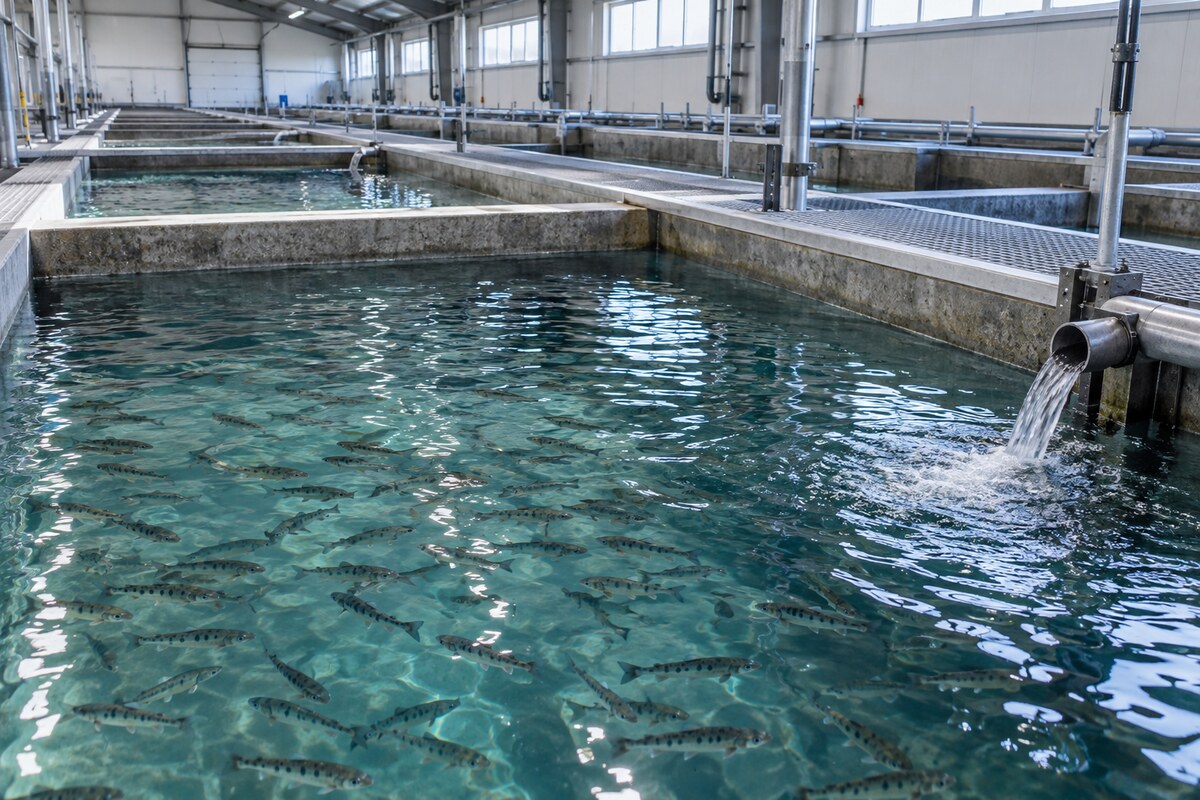
Inarctica began its 2025 Barents Sea stocking season with 600,000 Atlantic salmon and trout fingerlings from its own farms in Russia. The season was expected to continue until August. Deputy chief executive Andrei Baranov said the company would continue buying imported smolt while gradually increasing its domestic share. He attributed successful initial stocking to favourable weather and biological conditions and coordinated work with partners. Its five fry farms span Karelia and the Kaluga, Nizhny Novgorod and Arkhangelsk regions. The June 10, 2025 announcement connected these investments with closer control of production costs and quality.
The Kondopoga hatchery’s construction had reached a documented milestone on May 14, 2024, when it received a statement confirming conformity with its design documentation. Contractor Inspirem Rus supplied technical customer services, construction management, health and safety management and civil supervision during 2023–2024 under a contract with Inarctica NW. The facility in the Republic of Karelia breeds salmonids in basins supplied by a flow of freshwater. Inspirem described the technology as supporting year-round rearing independently of climatic conditions. Its description identifies a freshwater flow-through facility; it does not establish a recirculating-water installation or a seawater grow-out plant.
Test operation before full capacity
Inarctica announced test operation at Kondopoga on August 13, 2024. The design allowed up to six million Atlantic salmon and trout juveniles annually, with full-capacity operation then anticipated by 2025. Commissioning teams were still adjusting the systems, and the first deliveries from the test batch were scheduled for autumn 2024. The Kondopoga project was intended to supply the group’s fish farms in the Murmansk region and Karelia. Two hatcheries acquired in the Kaluga and Nizhny Novgorod regions in 2023 were also undergoing modernisation. Inarctica linked these investments to its strategy of overseeing aquaculture from eggs through to sales and reducing dependence on imported inputs. The announced six-million capacity describes the plant’s annual design potential, while the autumn dispatch schedule was a commissioning-stage plan.
Inarctica’s 2023 production operations already combined marine and freshwater farming. In the Murmansk region, it stocked four fish farms with 8.2 million Atlantic salmon and rainbow trout juveniles whose average weight was 126 grams. Harvesting there produced 31,300 tonnes of marketable fish in live weight during the year. Sales of gutted fish with heads amounted to 26,800 tonnes. Karelia operations stocked approximately 2.4 million rainbow trout fry and harvested 1,700 tonnes of marketable fish in live weight. Sales there totalled 1,400 tonnes of gutted fish with heads and caviar products. Different generations remained assigned to separate farming sites under the biosecurity strategy, with commercial fish held at sites FFS-3 and FFS-1. At the end of 2023, average fish weight in the Murmansk operations was 0.87 kilograms. Inarctica planned to stock three to five farms there in 2024. These operations formed the destination network for the group’s growing domestic juvenile supply. The historical operating figures retain their respective live-weight and product-weight bases, as well as the distinction between the Murmansk marine farms and the Karelia freshwater operations.

The wider hatchery and feed investment plan
In November 2023, then chief executive Ilya Sosnov outlined an ambition to double fish production to around 60,000 tonnes annually over five to seven years. His tentative estimate put the required capital expenditure at approximately 20 billion rubles over five years. He stressed the difficulty of setting a precise timetable because technology choices and other uncertainties remained unresolved. Sosnov discussed the estimates in a SberCIB webinar accompanying Inarctica’s secondary public offering on the Moscow Exchange. The development programme included:
- Kondopoga, planned for launch in 2024 with capacity for six million juveniles annually.
- A proposed additional hatchery at Retinskoye in the Murmansk region, whose cost had not yet been estimated.
- A feed plant with planned annual capacity of 70,000 tonnes and estimated investment of 4.5 billion rubles.
Sosnov expected that feed volume to support 45,000–50,000 tonnes of fish production. The company also intended to purchase additional feed externally. Sosnov described the proposed Retinskoye location as suitable and said that project would provide the main foundation for doubling production. These were management’s estimates and intentions at the time.
The biological transition from freshwater to sea
Juvenile salmon undergo smoltification before moving from freshwater hatcheries to seawater grow-out. A January 25, 2024 study by Vasco C. Mota and colleagues examined how dietary fat and temperature affected that transition. The researchers reared approximately 19-gram Atlantic salmon parr for 14 weeks in freshwater recirculating systems at 12°C, using diets containing 20%, 24% or 28% fat. Approximately 96-gram smolts then spent 12 weeks in seawater flow-through systems, receiving a common diet with 26% fat at either 12°C or 16°C. Freshwater dietary fat changed body composition, but the groups showed comparable growth and smoltification indicators. Differences in whole-body fat faded during the seawater phase. Fish at 16°C became larger, while some individuals showed signs of early male maturation. The controlled feeding experiment concerned its own experimental fish and husbandry conditions. Its findings provide physiological context for hatchery production and seawater transfer, without measuring the performance of Inarctica’s juveniles or describing Kondopoga’s operating protocol.
Biological losses during the supply-chain transition
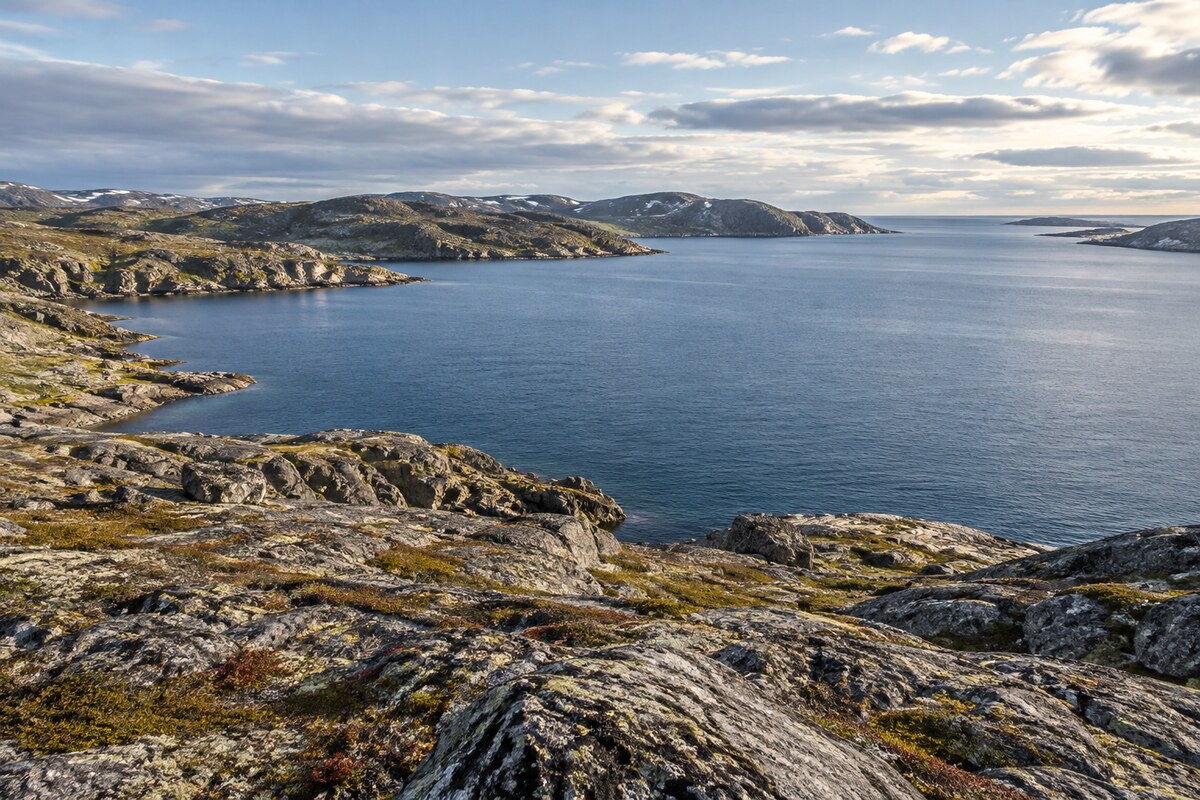
Inarctica’s first-half 2024 operations faced several pressures before the new hatchery’s test launch. The company attributed unusually high biological losses to very low water temperatures in the Barents and Norwegian seas during January–March, intensive salmon-lice infestation and jellyfish damage. It valued above-normal biological-asset losses at 2.4 billion rubles. Changes to juvenile supply routes, a partial switch towards domestic fish and shifted stocking dates also affected the production model. Biomass in the water stood at 15,600 tonnes at June 30, 2024, compared with 31,000 tonnes a year earlier. Meanwhile, product sales increased from 13,600 to 16,300 tonnes, and revenue reached 18.3 billion rubles. The company recorded a net loss of 1.4 billion rubles after biological-asset revaluation, while adjusted net profit excluding that revaluation was 6.3 billion rubles. First-half free cash flow reached 7.5 billion rubles, compared with 1.8 billion rubles a year earlier.
By the end of 2024, Inarctica had increased biomass in the water to 22,700 tonnes. Its March 18, 2025 results linked the recovery during the second half with a return to net profit for that period. Second-half net profit reached 9.2 billion rubles, following the first-half loss. For the full year, net profit was 7.8 billion rubles, down 50% from 2023; adjusted net profit before biological-asset revaluation was 10.3 billion rubles. Annual sales declined to 25,700 tonnes from 28,200 tonnes, while revenue rose to 31.5 billion rubles. Management attributed the revenue performance to demand for chilled salmon and pricing factors. Adjusted EBITDA amounted to 12.5 billion rubles, with a 40% margin. The group continued modernising the acquired juvenile farms while building its feed operation in Veliky Novgorod. It ended the year with net debt of 12.7 billion rubles and free cash flow of 5.7 billion rubles, alongside those continuing infrastructure investments.

Vessels connect hatcheries, cages and processing
Transport capacity expanded alongside domestic juvenile production. In May 2025, Inarctica received the live-fish vessel Anatoly Firsov, adapted to its requirements and capable of carrying up to 173 tonnes. In its August 20, 2025 fleet update, the company identified the vessel as its fourth and largest live-fish carrier, increasing fish transport capacity by more than 50%. Such vessels support stocking, sea-lice control, harvesting and delivery from Barents Sea cages to the Murmansk processing plant. The group also used 11 feed-distribution barges. Feed travels from the barges through pipes driven by compressed air, while fish farmers work aboard and manage the cages. An additional barge under construction at a Russian yard was designed to hold 850 tonnes of feed. Entry into service was planned for 2026.
The chilled-fish distribution network
The group’s downstream distribution operations extend the production chain beyond the hatcheries and sea farms. On August 21, 2024, Inarctica reported preliminary first-half figures showing a 26% year-on-year rise in chilled aquaculture fish shipments to regions outside Moscow and St Petersburg. Shipments to the Southern district, including Krasnodar and Rostov-on-Don, grew 15% by volume. The Urals district, including Yekaterinburg, Tyumen and Perm, grew 45%, while Siberian destinations including Novosibirsk, Krasnoyarsk and Omsk grew 37%. The company delivered directly to more than ten cities. It gave delivery times after harvesting of two days to St Petersburg, three days to Moscow and five days to Krasnoyarsk. Vladivostok was its most distant shipment destination from Murmansk. Commercial director Konstantin Klinov attributed regional expansion to work with distributors and direct contracts with retail chains and processors. The shipment percentages concern the first half of 2024 and specific regional channels, rather than the group’s total annual fish output.

Financing the infrastructure programme
In July 2024, ACRA upgraded Inarctica from A(RU) to A+(RU) with a stable outlook. Inarctica’s July 29 announcement attributed the decision to stronger qualitative assessments of leverage and corporate governance, alongside the agency’s expectations for improving free cash flow. ACRA considered the debt portfolio more balanced because a substantial share of obligations carried fixed rates and long-term funding had increased after refinancing a bond redeemed in March 2024. The agency also highlighted liquidity, profitability, market position and geographical diversification. Its assessment put the company’s share of farmed Atlantic salmon, sea trout and lake trout markets at 29% by value and 19% by volume. ACRA expected revenue growth under conditions of increasing stocking, limited salmon availability and higher prices. That expectation belonged to the 2024 rating assessment and remained a forecast. The A+(RU) grade represented moderately high creditworthiness on ACRA’s national scale, while the stable outlook expressed the agency’s assessment at that date.
Later in 2025: more growing fish
The August 29, 2025 half-year results showed how the age mix of the fish population affected near-term sales. Biomass in the water reached 20,900 tonnes at June 30, up 34% year on year. Young fish below the preferred selling weight accounted for 69% of biomass, compared with 48% a year earlier. Inarctica described an approximately two-year marine production cycle to reach a commercial weight of five to six kilograms. Sales in the half-year declined 48% to 8,400 tonnes, while revenue fell 45% to 10 billion rubles. Chief executive Sergei Limarenko expected the recovering biomass to translate into stronger sales and financial results during 2026 and afterwards. The company recorded an adjusted net profit of 0.8 billion rubles excluding biological-asset revaluation, alongside a reported net loss of 7.5 billion rubles. Those adjusted and reported results use different accounting treatments, while the biomass figures concern fish still growing in the water.

March 2026 update: biomass and construction
Inarctica’s March 31, 2026 full-year release placed biomass at 30,100 tonnes at the end of December 2025, an increase of 33% year on year. The combined volume of marketable fish and fish expected to reach an optimal selling weight in the second half of 2026 exceeded the corresponding 2024 level by 27%. Annual fish sales nevertheless fell to 22,200 tonnes, compared with 25,700 tonnes in 2024, and revenue declined 22% to 24.6 billion rubles. Inarctica attributed the revenue decline to temporarily lower sales volumes and lower red-fish prices. It recorded a net loss of 2.2 billion rubles including biological-asset revaluation, while adjusted net profit was 2.1 billion rubles. Construction of the Novgorod-region feed plant and development of the five domestic hatcheries continued. The group retained its strategic production target of 60,000 tonnes annually. These later operating and construction updates record the position after the 2025 stocking season rather than treating its original plans as completed outcomes.
Working capital for the next production season
In May 2026, the financing programme explicitly included the recurring inputs needed to grow the fish population. Inarctica closed the order book for a three-billion-ruble bond issue, series 002R-06, on May 28 and announced the terms the following day. The monthly coupon was set at the Bank of Russia’s key rate plus 280 basis points. Each bond had a face value of 1,000 rubles, with maturity three years after the start of placement. Technical placement was scheduled for June 2. Private investors, major Russian banks, investment managers and insurers participated in the offering. The company intended to use proceeds for feed and juveniles in the new production season and later refinancing of its 2024 bond issue. At that announcement, Inarctica was still investing in five smolt plants and constructing its own aquaculture feed production. The May release also recorded a 31% year-on-year revenue increase for January–April 2026, alongside continued investment in smolt production. The stated uses of funds covered both the biological production cycle and refinancing; the order-book announcement did not report completed spending on those purchases.




















Leave a comment