
Konecranes’ Indian RTG order and its electrified terminal portfolio
An Indian terminal’s 30-crane order sits alongside hybrid RTGs, battery vehicles and retrofit projects in Konecranes’ port equipment portfolio.
An Indian order built around batteries
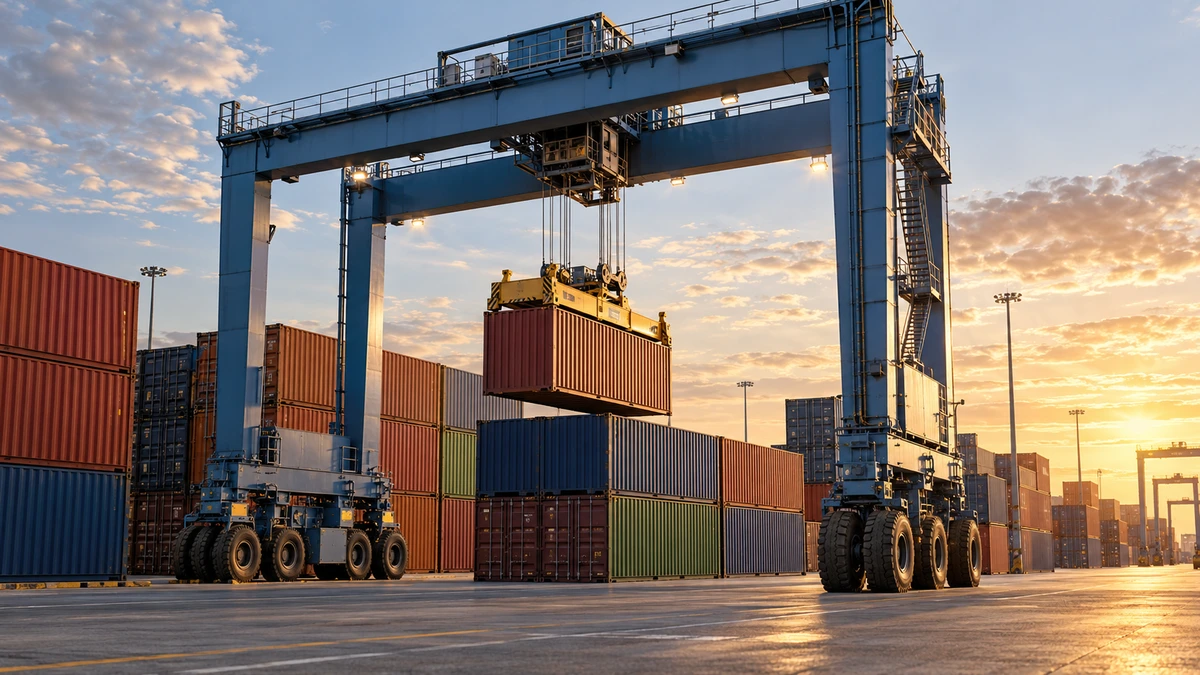
An unnamed container terminal in India ordered 30 Konecranes rubber-tired gantry cranes, Reuters reported on Oct 31, 2025. Konecranes booked the order in the third quarter of 2025. The greenfield terminal selected E-Hybrid cranes configured with onboard batteries and a busbar electricity supply. Batteries power crane operations, while the busbar charges them dynamically as required.
Delivery is scheduled for the first quarter of 2027. Konecranes says the selected power configuration permits continued operation during grid interruptions and produces zero tailpipe emissions. The manufacturer puts peak demand at 60 kW per crane, compared with up to 400 kW for traditional electric RTGs. These are the supplier's stated equipment characteristics.

Cartagena combines new cranes and existing equipment
A separate terminal project in Cartagena, Colombia, combines 25 new RTGs with retrofits for 10 existing cranes. Konecranes announced the order in September 2025, alongside an ongoing programme to retrofit 37 third-party RTGs for remotely supervised operations. The terminal already operated two Konecranes straddle carriers and four reach stackers. Its modernisation encompasses container stacking, truck lanes and gantry movement, with remote supervision incorporated into the handling system.
The 25 new cranes are scheduled to arrive in five batches, beginning in the fourth quarter of 2026 and ending in the first quarter of 2028. Konecranes plans to integrate the equipment with existing information technology and operational technology infrastructure, including networks, yard controls and remote operating stations. Truck guidance and truck lift prevention form part of the technology package. A service level agreement provides for long-term support of the terminal equipment.
Houston adds hybrid equipment and modernisation services
Port Houston, on the Gulf Coast of the United States, ordered 16 hybrid Konecranes RTGs for delivery in the first half of 2026. The new units are designed for one-over-six container stacking and include Auto-Steering, Stack Collision Prevention and Truck Lift Prevention. Konecranes associates the hybrid power units with lower fuel consumption and emissions. Following the new orders, the port's Konecranes RTG fleet is expected to reach 163 cranes, including 73 hybrid models.

The Houston programme also includes upgrades to eight cranes already working at the port. Those retrofits were scheduled for completion by the fourth quarter of 2025. Konecranes Port Services is to install the same smart handling features, together with Gantry Collision Prevention and new E-Chains. The port paired the purchase of additional handling capacity with modernisation of its existing fleet. The supplier's service organisation is responsible for the retrofit work as well as supporting the installed equipment.
Two power configurations for GCT
GCT Global Container Terminals ordered 10 hybrid RTGs for Deltaport and one fully battery-powered RTG for Vanterm, its two British Columbia terminals. The 11 cranes are scheduled for delivery by the third quarter of 2026, taking GCT's Konecranes RTG fleet to 43 units. Its earlier cranes use the manufacturer's Diesel Fuel Saver system. The new purchase combines a larger hybrid-crane deployment at Deltaport with a single battery-powered pilot at Vanterm.
The Vanterm crane is to receive a dedicated charging container and an automated charging interface integrated with the site's electricity infrastructure. GCT intends to use the pilot to inform subsequent decisions on its emissions pathway. The operator has set a target of reducing absolute emissions by 45% by 2030 and reaching net zero by 2050. Those targets accompany the equipment investment; they remain GCT's stated future objectives. Konecranes identified the Vanterm unit as its first fully battery-operated RTG order.

Local manufacturing and hybrid drives in Gdynia
Baltic Container Terminal in Gdynia, Poland, ordered eight hybrid RTGs in the second quarter of 2025. The ICTSI-owned terminal made its first investment in Konecranes RTGs through this contract. Each crane combines battery technology with a compact diesel generator set. The project receives funding through the European Union's NextGenerationEU programme under the intermodal-projects component of Poland's national recovery plan. Konecranes plans to manufacture the cranes through its established Polish production network.
The delivery includes the company's 3,000th RTG manufactured and delivered worldwide. The handling package incorporates Stack Collision Prevention, Auto-TOS Reporting and Auto-Steering. Konecranes said in August 2025 that more than 225 of its hybrid RTGs were operating globally. BCT's own terminal capacity exceeds one million twenty-foot equivalent units, or TEUs. Its location connects maritime cargo with road routes and on-dock rail services, placing the crane order within a terminal that already serves inland transport connections.
Montgomery links rail and truck transfers
The Alabama Port Authority booked an order for two Konecranes RTGs in the third quarter of 2025 for its new Montgomery Intermodal Container Transfer Facility. The cranes support container transfers between rail and trucks. The port authority's container volumes at Mobile had increased from approximately 502,000 TEUs in 2021 to more than 563,000 TEUs in 2023. The Montgomery investment extends an existing supplier relationship involving Konecranes mobile harbour equipment.
Delivery of the new RTGs is scheduled for the fourth quarter of 2026, ahead of the terminal's planned opening in early 2027. The equipment package includes Active Load Control, Auto-Steering, Auto-Positioning and reporting to the terminal operating system. Stack Collision Prevention and Auto Path Optimizing are included, while Auto-Truck Guiding assists road vehicles during container pick-up and drop-off. Konecranes described the purchase as the Alabama Port Authority's first investment in its RTGs.
Tenerife retains existing cranes alongside new units
Boluda Maritime Terminals Tenerife signed a contract for four hybrid Konecranes RTGs in December 2024. The independent operator provides container handling and logistics services at the Port of Tenerife in the Canary Islands, a trading location between Africa, the Americas and Europe. Boluda selected hybrid drives after reviewing fuel-consumption calculations and comparisons. Konecranes associated the choice with improved fuel efficiency and lower emissions, without publishing a numerical fuel-saving result for this specific order.
The four new cranes are to join two Konecranes RTGs delivered in 2007. Their equipment package includes Auto-Steering, Auto-TOS Positioning, Auto-Positioning, Stack Collision Prevention and Truck Lift Prevention. The existing machines remain part of the terminal's handling fleet as Boluda adds hybrid units with more recent operating features. Konecranes presented the new cranes as another step in the operator's equipment programme. The order expands a relationship built around the two earlier cranes and introduces hybrid power alongside their established operations.

Battery operation with a diesel charging source
CMA CGM Kaohsiung Terminal ordered five hybrid Konecranes RTGs in the third quarter of 2024. These cranes use a battery for operating functions and recover braking energy into that battery, extending the period of electric operation. A small diesel generator set charges the battery. Konecranes attributes reductions in fuel consumption and emissions to this combination. The equipment specification also provides an ergonomic cabin and four smart handling functions intended to assist operators during container-yard work.
The Kaohsiung delivery was scheduled for mid-2025. Auto-Steering creates virtual rails to help keep the crane on a straight driving path. Auto-Positioning places the spreader over the selected container slot. Stack Collision Prevention uses laser scanners to monitor the stack while the trolley moves and slows it as the spreader or container approaches the target. Auto-TOS Reporting counts crane movements, maps container positions and exchanges information with the terminal operating system. These are the functions specified for the five-crane order.
Hybrid cranes at an inland rail terminal
South Carolina Ports purchased two hybrid Konecranes RTGs for Inland Port Greer in the fourth quarter of 2023. The cranes supplement seven existing Konecranes RTGs. Greer operates around the clock and provides an overnight rail shuttle linking South Carolina's Upstate region with the Port of Charleston. At the time of the equipment announcement, the inland terminal was expanding to double its size and increase its rail and cargo-handling capabilities.

Delivery and commissioning of the two new cranes were planned for the fourth quarter of 2024. Their span covers six container rows and a truck lane, with one-over-five stacking capability. A battery supports normal operations, with diesel power available when additional power is required. Each crane includes an ergonomic cabin and TRUCONNECT Remote Monitoring. Konecranes links the monitoring service to equipment performance, maintenance planning and downtime management. The cranes add handling equipment to a terminal whose connection to the seaport is provided by rail.
Automated vehicles at ECT Euromax
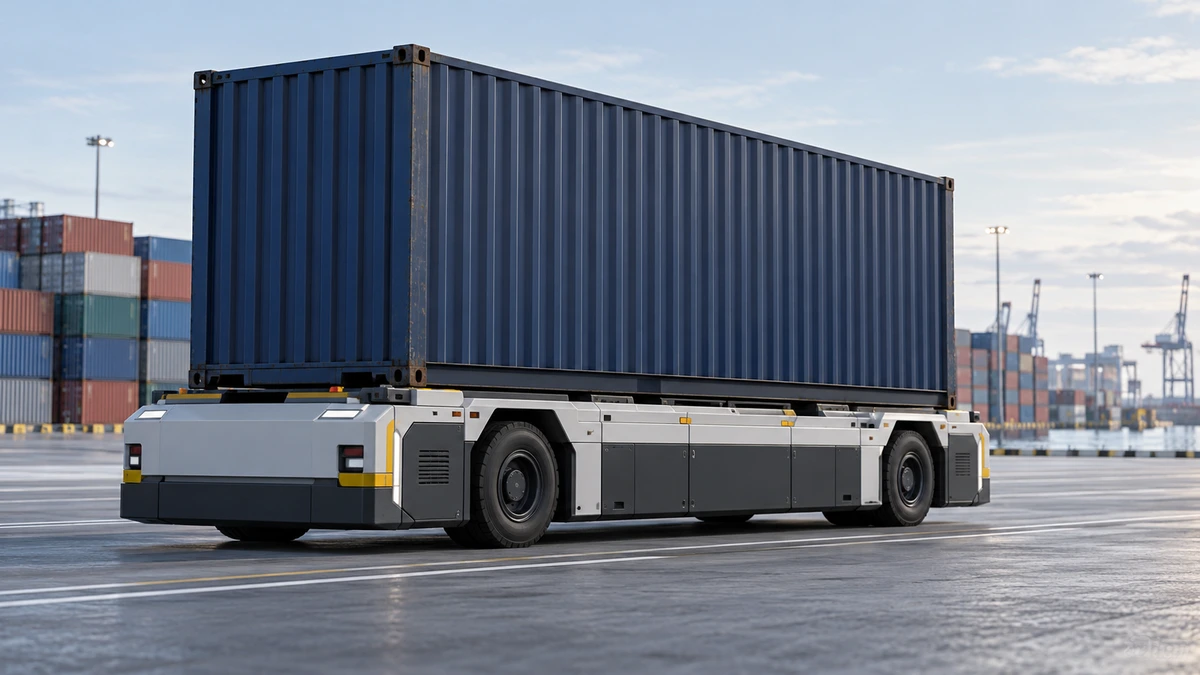
Hutchison Ports ECT Rotterdam selected 42 lithium-ion battery automated guided vehicles, or AGVs, for its Euromax terminal. The order, booked during the first half of 2025, includes automated fast-charging stations. The vehicles are designed to work alongside the existing diesel-powered AGV fleet. A battery management system collects and stores data from both operating and charging cycles. Konecranes' earlier relationship with ECT included a contract for 96 diesel-electric AGVs signed in 2005.
The new automated horizontal transport system uses TEAMS equipment control software to manage vehicle routes and their sequencing with ship-to-shore and automated stacking cranes. A failure management and diagnostic system provides equipment-status information down to component level, including the batteries and charging equipment. Konecranes describes this combination of vehicles, charging infrastructure and software as support for the terminal's transition to electric operations. Container transport, battery monitoring and equipment coordination are included within the same system delivery.

A larger system for Maasvlakte II
APM Terminals Maasvlakte II booked a Konecranes automated horizontal transport system in the third quarter of 2024 as part of a project to double terminal capacity in Rotterdam. The order includes 71 battery-powered Lift AGVs and an extension of TEAMS equipment control software to operate more than 100 vehicles. The equipment is to interface with the terminal's existing ship-to-shore cranes, container stacks and first-phase infrastructure. The terminal site spans 180 hectares, with 2,000 metres of deep-sea quay and 500 metres of barge quay.
Delivery and commissioning were expected to begin in 2025. A battery exchange station included in the order takes the site's total to three. CONTROLS Emulation software provides a virtual terminal environment using the same interfaces as the actual terminal operating system. It permits detailed planning of operations before execution and provides a training environment for new operators. Integration, commissioning and automation-consultancy services complete the delivery. Konecranes supplies the vehicles together with equipment-control and simulation software and the services required to introduce them into terminal operations.
Installation during operations in Hamburg
HHLA's Container Terminal Burchardkai ordered a fully electric horizontal transport system comprising 116 lithium-ion battery AGVs and 20 automated charging stations in 2022. Konecranes said in October 2024 that deliveries were underway and would continue through 2025. The package includes battery management, TEAMS equipment control software and an interchange and fence-control safety system. Installation is being carried out while the terminal remains operational. The equipment serves automated container transport between the quayside and storage areas.

The Hamburg delivery also includes access gates and interfaces to quay cranes and automated stacking cranes. Following the order, HHLA's total Konecranes AGV fleet is expected to exceed 200 vehicles. The terminal operator estimated that full implementation of the transformation could reduce annual carbon dioxide emissions by up to 12,000 tonnes. That estimate applies to the completed transformation. HHLA has separately set a goal of carbon neutrality by 2040. The project replaces manual diesel-powered transport with automated electric vehicles within an operating terminal.
Later development: automated gantry travel
On May 20, 2026, Konecranes introduced fully automated gantry long travel for automated RTGs in mixed-traffic yards. The feature became available on new equipment and as a retrofit for existing Konecranes A-RTGs. The company said development and testing had moved the earlier A-RTG 2.0 concept into operation at multiple sites. The design permits automated gantry movement without direct human supervision or restrictive fencing around the truck lane, according to the manufacturer.
The system combines several detection layers. Long-range three-dimensional lidar detects large objects up to 50 metres ahead, allowing early detection and controlled deceleration. A safety-rated laser scanner provides closer-range detection and supports stopping when necessary. Encoder feedback and mechanical protective covers form additional parts of the system. Konecranes offers the feature as a stand-alone module that can be retrofitted to its automated RTGs. The manufacturer states that the long-travel function has a PLd safety rating under ISO 13849-1 and was verified against ISO 3691-4 for driverless industrial vehicles.
A subsequent order across four terminals
YILPORT Holding ordered 53 E-Hybrid RTGs in an agreement announced on Jul 3, 2026. It covers four terminals in Europe, Africa and Central America: Liscont and Leixões in Portugal, Acajutla in El Salvador and Takoradi in Ghana. Konecranes' regional service organisation supports all four locations. The order combines automated and manual equipment within one terminal operator's investment programme.
Deliveries are planned in batches over the two years following the announcement. The automated cranes for the two Portuguese terminals include Auto-Gantry, enabling unsupervised gantry travel alongside automated stacking. YILPORT described the investment as part of its long-term growth strategy and plans to lower emissions. The terminal allocations within the order are:
- Liscont: 10 automated E-Hybrid RTGs;
- Leixões: 10 automated E-Hybrid RTGs;
- Acajutla: 18 E-Hybrid RTGs;
- Takoradi: 15 E-Hybrid RTGs.




















Leave a comment