
RusHydro’s generation and grid investment program: plants, equipment and construction
RusHydro’s investment program combines small hydropower stations, Far Eastern thermal projects, transmission lines and replacement equipment at existing plants.
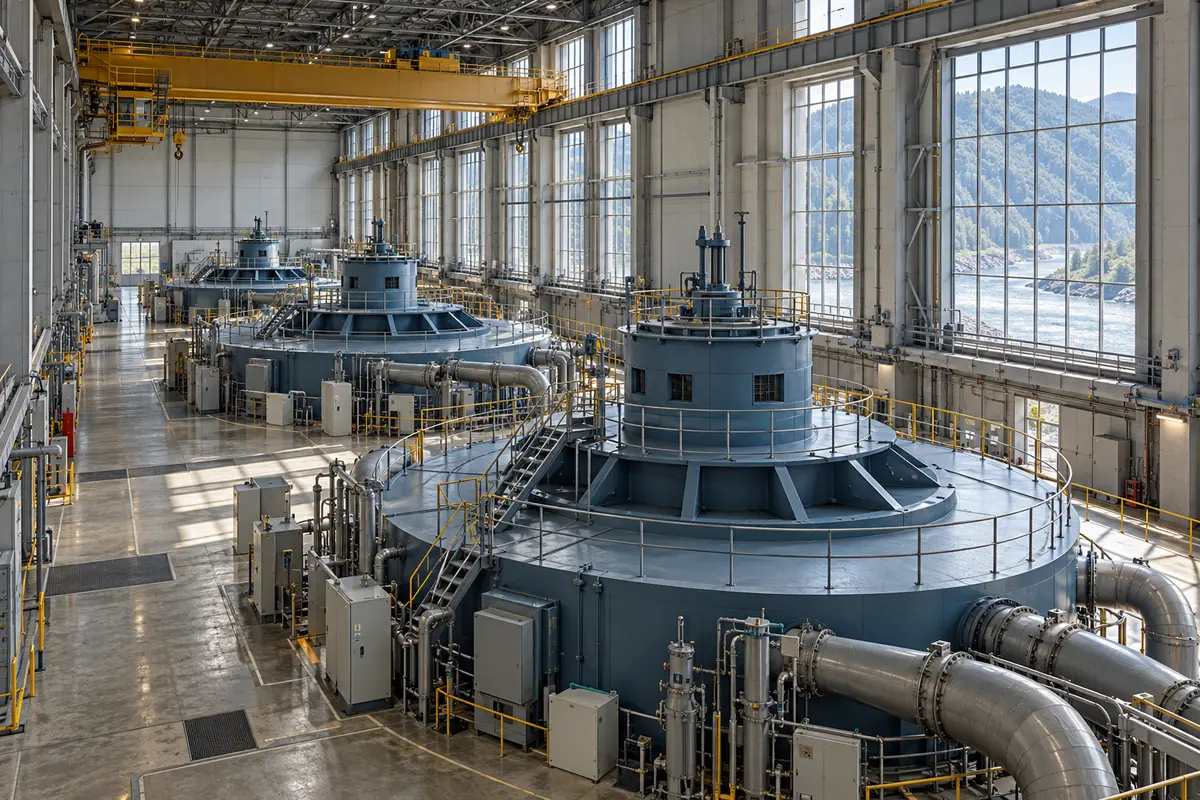
RusHydro's board-approved investment program for 2024–2028 envisaged commissioning about 2.4 GW of electrical capacity and more than 2,600 Gcal/h of thermal capacity. The program covered construction and reconstruction of 132 km of heating networks and approximately 8,000 km of electricity grids. Small hydropower additions included Bashennaya and Cherekskaya, alongside equipment replacement at existing stations in Russia.
The June 2024 program also included Vladivostok CHPP-2 reconstruction, Artemovskaya CHPP-2, Khabarovsk CHPP-4, second stages at Yakutskaya GRES-2 and Neryungrinskaya GRES, and Partizanskaya GRES expansion. The second stage of the 110 kV Pevek–Bilibino line had a 2025 commissioning target, with the company considering earlier completion.

Investment funding and thermal construction
Funding under RusHydro's consolidated investment program reached RUB 237.2 billion during 2024, equivalent to 107% of the annual plan. New construction accounted for RUB 130.1 billion and technical re-equipment, reconstruction and modernisation for RUB 69.0 billion. Within new construction, Far Eastern thermal projects received RUB 105.3 billion. These funding figures include value-added tax. Commissioning indicators for the year included 217.82 MW of electrical capacity, 326.60 Gcal/h of heat capacity, 846.07 MVA of transformer capacity and 2,058.27 km of power lines.
Project schedules in the 2024 annual disclosure, published in 2025, assigned Artemovskaya CHPP-2 a planned 440 MW and a 2026 commissioning year. Khabarovsk CHPP-4 had a 410 MW design and a 2027 target. The second Neryungrinskaya stage comprised 450 MW, with commissioning scheduled across 2028 and 2029. Partizanskaya's expansion added a planned 280 MW. These were construction schedules and design capacities, with later progress disclosed separately as work continued.

Small hydropower on the Lower Cherek cascade
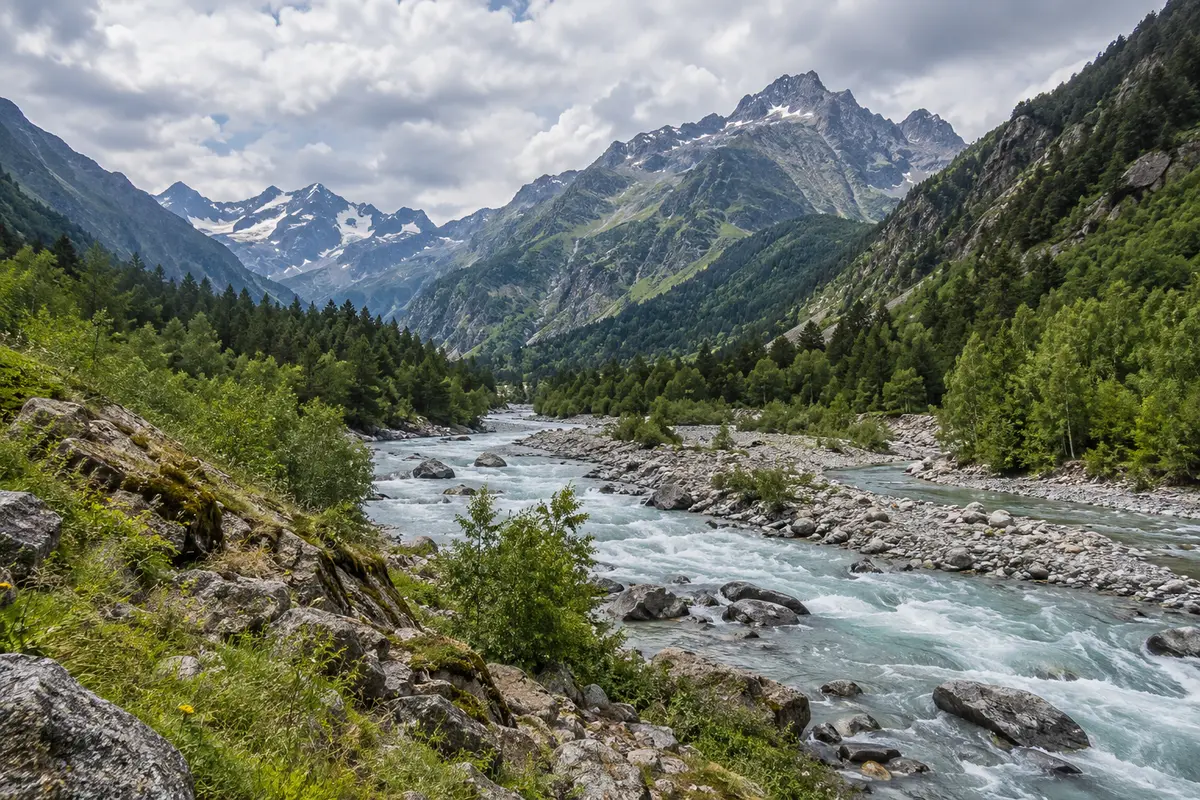
Cherekskaya HPP entered service on July 17, 2025, near Psygansu in the Urvan district of Kabardino-Balkaria. Its installed capacity is 23.4 MW, supplied by three generating units rated at 7.8 MW each. The diversion-type station uses water discharged by Zaragizhskaya HPP. Planned annual production is 87.1 million kWh. Cherekskaya became the fourth station in the Lower Cherek cascade, which also includes Kashkhatau at 65.1 MW, Aushigerskaya at 60 MW and Zaragizhskaya at 30.6 MW.
The North Caucasus regional dispatching centre participated in preparing the station for connection and operation. Its work covered design assignments, project and working documentation, technical decisions for the power-export arrangement, and grid-connection specifications. Specialists also reviewed generating-equipment test programs and took part in commissioning communication channels and telemetry links to the dispatching centre. The station was built under renewable-energy capacity-supply agreements, within RusHydro's small-hydropower development activities in the region.

Bashennaya on the Argun River
The System Operator announced the introduction of Bashennaya HPP on July 22, 2025. The 10 MW diversion-type station is on the Argun River in the Itum-Kalinsky district of the Chechen Republic. It has two generating units of 5 MW each. RusHydro's Dagestan branch operates the station. Like Cherekskaya, Bashennaya was built within the renewable-energy capacity-supply framework, adding a small hydroelectric facility to the North Caucasus power system.
Preparations included coordination of project and working documentation, technical solutions for delivering power into the network, and the conditions for technological connection. The regional dispatching centre also participated in approving equipment tests, bringing communications into operation and establishing telemetry collection and transfer to dispatchers. The System Operator expected the new station to support supply reliability in the eastern part of the Chechen Republic, where electricity consumption was increasing. Its commissioning work combined the generating units' introduction with the associated communication and dispatching arrangements.
Replacing equipment at Mainskaya HPP
Mainskaya HPP, downstream of Sayano-Shushenskaya, has an installed capacity of 321 MW. Its reservoir moderates uneven water releases from the larger upstream station. The original three units, each rated at 107 MW, were installed in the 1980s. Blade-adjustment problems subsequently led to operation with the turbine blades fixed in position. The operating head was also two metres below the original design level because the reservoir had not been filled to its intended elevation.
The replacement project separated design, equipment supply and installation into distinct packages. Turbine and generator contracts were signed with Power Machines and ELSIB in 2018; equipment deliveries began in 2020. The first replacement unit started operating in 2021, after a 330-day installation, followed by one machine annually. By the March 2024 corporate account, all three had been replaced. Transformers were renewed alongside the units, and the station also received 220 kV gas-insulated switchgear, new control systems, protection equipment and auxiliary electrical equipment.

Modernisation across the hydroelectric fleet
Across six hydroelectric stations, RusHydro renewed eight generating units with a combined capacity of 511 MW during 2024. Capacity re-registration, including equipment modernised in earlier years, added 33.5 MW to installed capacity: 15 MW at Ezminskaya, 7.5 MW at Nizhegorodskaya, 6 MW at Saratovskaya and 5 MW at Votkinskaya. The broader modernisation program had replaced or upgraded 145 turbines, 153 generators and 108 power transformers by the company's early-2025 account, together with more than 10,000 auxiliary-equipment items.
At Uglich HPP, replacement of generating unit No. 1 was completed in early 2025. Following the capacity re-registration procedure, the unit was expected to rise from 55 MW to 65 MW, taking the station to 130 MW. Saratovskaya's capacity increased by another 6 MW in February 2025 to 1,469 MW after unit No. 12 was upgraded. Other work included modernising electrical switchgear, replacing turbines and generators, and reconstructing hydraulic structures across the fleet. The program's cumulative installed-capacity increase stood at 631.5 MW.

The ninth replacement at Votkinskaya
By the June 2025 corporate publication, Votkinskaya HPP had replaced nine of its ten generating units. The latest was station unit No. 6, whose original equipment had operated for more than 60 years. Specialists from Gidroremont-VKK completed the replacement in 329 days, compared with the usual 350-day period cited by the company. The work included changing the turbine, generator and auxiliary equipment and updating the unit's automatic-control system.
The replacement equipment was manufactured in Russia. After the required tests, capacity re-registration was expected to increase the unit's rating from 100 MW to 115 MW. This stage of the program concerned an existing generating unit and its controls, with the higher capacity dependent on completion of the prescribed testing and documentation. At the time of the publication, that increase remained the next planned step following the equipment replacement.
Generator deliveries for new thermal units
In November 2025, ELSIB began shipping TF-220-2U3 turbogenerators for Artemovskaya CHPP-2. Each air-cooled machine is rated at 220 MW. The first had already been dispatched, while shipment of the second was due to finish by the end of November. The machines were intended for combined-cycle units using Power Machines gas turbines and natural gas to produce electricity and heat. ELSIB had presented a model of the new generator type at Russian Energy Week in October.
The manufacturer's delivery program also covered other RusHydro projects. Two additional 220 MW generators for Khabarovsk CHPP-4 were in production. ELSIB supplied two air-cooled 90 MW generators for Yakutskaya GRES-2's second stage during 2024 and 2025. Vladivostok CHPP-2 received two 130 MW machines in 2023 and 2024, with a third planned for 2026. These figures identify the generators' ratings; the projects' station and replacement-unit capacities were disclosed separately.

Gas-turbine equipment for Khabarovsk
Power Machines announced completion of a GTE-170.1 gas turbine for Khabarovsk CHPP-4 in March 2026. The turbine underwent factory control tests at the Leningrad Metal Works assembly stand in the presence of the customer, including rotor turning using a turning device. Khabarovsk CHPP-4 was designed to use two large gas turbines within a natural-gas combined-cycle configuration. Its planned electrical capacity was 410 MW, with approximately 1,389 Gcal/h of heat output.
The new station was intended to replace Khabarovsk CHPP-1, which had been operating for around 70 years. Power Machines' scope included supervising equipment installation and commissioning. The manufacturer was also developing its domestic gas-turbine production series, with capacity for eight machines a year and plans to increase that to ten from 2029. Investment in that manufacturing program was RUB 25 billion, including RUB 6.9 billion in state support for research and development. These amounts concerned the manufacturer's turbine program.

The Pevek–Bilibino transmission project
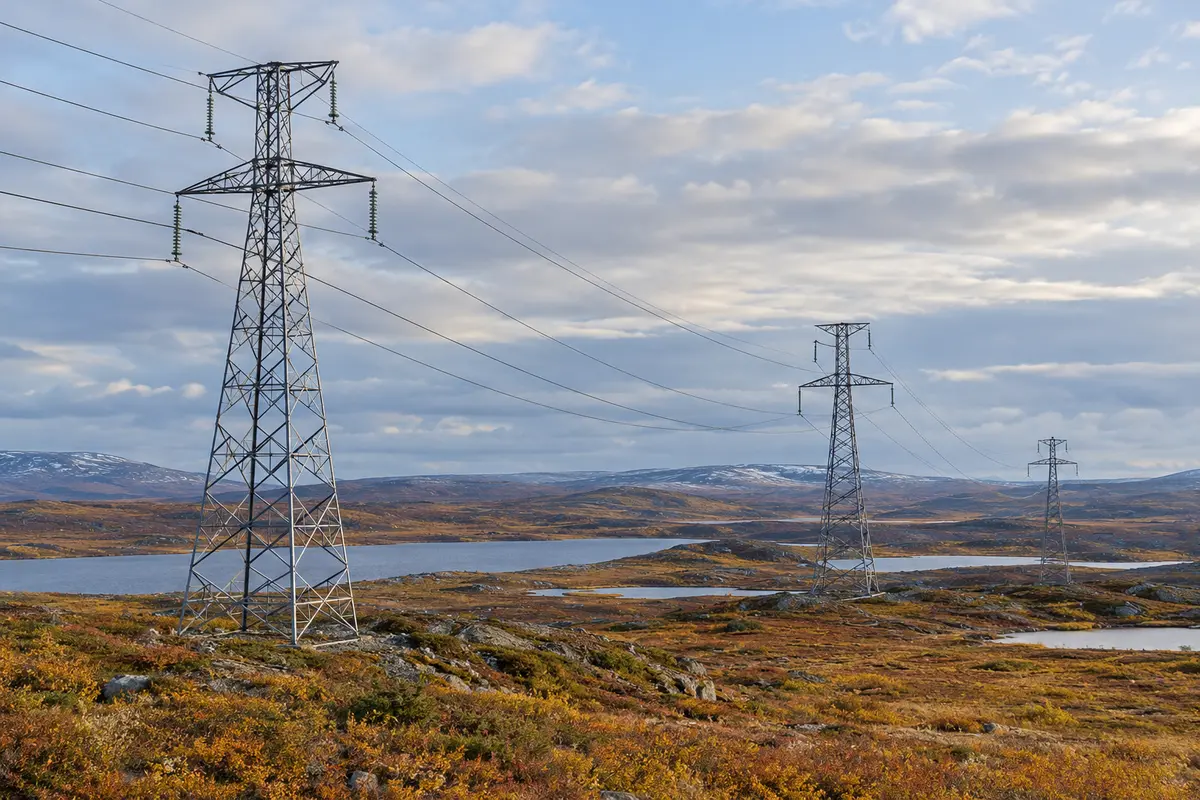
RusHydro launched the first stage of the Pevek–Bilibino power line in September 2023. The second stage originally had a 2025 commissioning schedule. In October 2023, the company said it might bring that stage into operation before the end of 2024. The second-stage construction scope included another overhead-line circuit, reconstruction of the 110 kV Yuzhny substation and construction of the 110 kV Beta switching station.
The line was intended to support power delivery from the Akademik Lomonosov floating nuclear power plant in Pevek to customers in Bilibino and mining operations. The Baimsky GOK copper project was the largest identified mining development. RusHydro said the financing decisions had been made and that the work would be funded primarily from its own resources. The earlier-completion date was a company forecast, alongside the original schedule and the stated construction scope.
A new connection between Magadan's largest hydro stations
A 220 kV overhead line between Kolymskaya and Ust-Srednekanskaya HPPs entered operation in September 2025. The 133 km line includes a branch to the Elektrokotelnaya substation and forms part of Magadanenergo's project to update the Ust-Srednekanskaya power-export arrangement. Previously, the two largest generating stations in the Magadan system were linked through two 220 kV transmission routes and one 110 kV route. The new connection added another high-voltage path between them.
The Pacific regional dispatching centre and Magadanenergo prepared operating arrangements for introducing the line. Work included reviewing design documentation, developing the trial-energisation program and bringing relay-protection and automation equipment into service. Specialists calculated power-system operating conditions and short-circuit currents for different network configurations, established protection settings and tested telemetry collection and transmission. The System Operator expected the connection to reduce constraints on maintenance at Ust-Srednekanskaya and remove some restrictions on delivering its output to the grid.
Engineering work behind the construction program
RusHydro's design institute worked on generation and network projects at several stages of development during 2024 and early 2025. Its completed designs included Ust-Srednekanskaya HPP, whose construction finished in 2024. Ongoing assignments included the two new Partizanskaya units, with a combined planned capacity of 280 MW, and reconstruction of fuel-handling facilities at Magadan CHPP. The institute also designed the Kolymskaya–Ust-Srednekanskaya transmission line and began work on the power-export connection for Artemovskaya CHPP-2.
In Kamchatka, project documentation for a 220 kV Mutnovskaya geothermal–Tolmachevskaya HPP-3 connection was submitted for state examination in 2024. Engineering surveys were completed for the proposed Mutnovskaya geothermal plant's second station, alongside design work on a binary unit at the existing geothermal facility and Tolmachevskaya HPP-4. In Primorye, documentation covered 16 projects for reconstructing 35–110 kV lines and substations. At the proposed Nizhne-Zeyskaya HPP site, work included hydrometeorological observations, topographic surveys, drilling and investigations for access roads and construction materials.
The institute completed Nizhne-Zeyskaya's investment justification in 2024 and submitted preliminary project documentation for approval in December. That version refined the proposed generating-unit count, installed capacity and long-term average electricity production.
Vladivostok's replacement-unit program
A second replacement generating unit at Vladivostok CHPP-2 had entered operation by the January 2026 corporate account. The new equipment provided 120 MW of electrical capacity and 190 Gcal/h of heat capacity. Following its introduction, the station's total electrical capacity rose from 537 MW to 559 MW, while thermal capacity increased from 1,063 to 1,093 Gcal/h. Those station totals incorporate the replacement of earlier equipment within the operating plant.
The modernisation project began in 2021 and was divided into three stages. The first finished in February 2024; completion of the whole project was expected at the end of 2027. It covers replacing three turbine-generator units and installing three new boilers in place of six older boilers that had operated for more than 40 years. The projected final station capacity was 574 MW and 1,115 Gcal/h, compared with the pre-project baseline of 497 MW and 1,051 Gcal/h.
Later investment spending and construction progress
For 2025, RusHydro recorded RUB 207.8 billion directed to new energy construction, including RUB 192.0 billion for Far Eastern thermal plants. Technical re-equipment, reconstruction and modernisation received RUB 63.4 billion. The group introduced 1,634.89 km of power lines and 575.47 MVA of transformer capacity. Its installed generating capacity reached 38.7 GW including Boguchanskaya HPP. The group's generation figure of 125.2 billion kWh excluded Boguchanskaya, retaining a different reporting boundary.
Year-end construction progress varied across the thermal projects: Vladivostok reconstruction was 71% complete, Partizanskaya's new units 51%, Neryungrinskaya's 19%, Khabarovsk CHPP-4 45%, Artemovskaya CHPP-2 42% and Yakutskaya GRES-2's second stage 39%. The later investment disclosure covered activity across several distinct categories:
- new generating stations and extensions of existing thermal plants;
- replacement and modernisation of hydroelectric and thermal equipment;
- power lines, substations and associated network capacity.




















Leave a comment