
Xerox and Lexmark: acquisition, integration and a broader technology portfolio
Xerox completed its $1.5 billion Lexmark acquisition in July 2025, expanding its print portfolio and setting integration targets for the combined business.
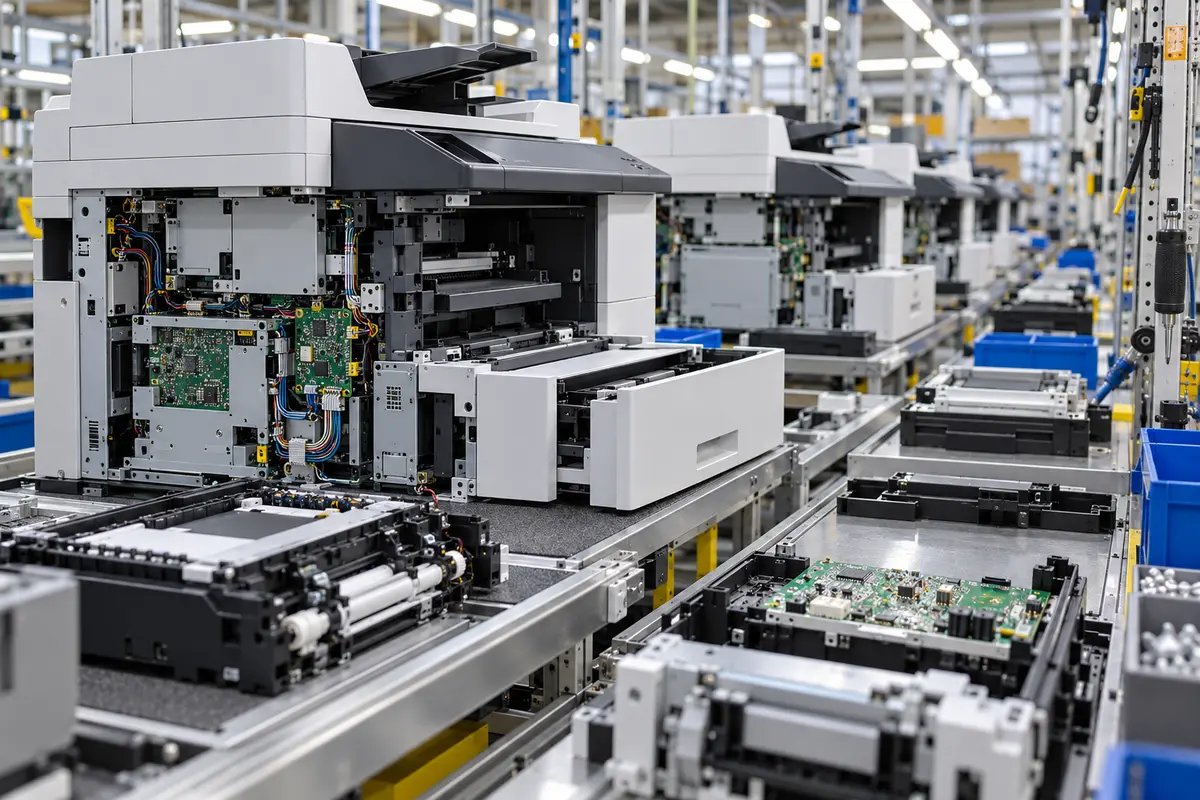
Lexmark joins Xerox
Xerox completed its acquisition of Lexmark on 1 July 2025, bringing together businesses that already had a supplier relationship. The $1.5 billion transaction value included net debt and assumed liabilities. Steve Bandrowczak remained Xerox’s chief executive, while Allen Waugerman stepped down as Lexmark’s president and chief executive. Xerox put the combined organization’s reach at more than 200,000 clients in over 170 countries, with 125 manufacturing and distribution facilities across 16 countries. Cash and debt financed the purchase. At closing, Xerox expected approximately $240 million in transaction-related cost synergies to contribute more than $1 per share in additional adjusted earnings by the end of the second year after completion. Those savings and earnings benefits remained forecasts.
The agreement and the combined print portfolio
Xerox announced the acquisition agreement on 23 December 2024. Lexmark’s owners were Ninestar Corporation, PAG Asia Capital and Shanghai Shouda Investment Centre. Lexington, Kentucky-based Lexmark supplied printers, multifunction printers and imaging technologies. Xerox planned to combine that portfolio with its ConnectKey technology and print and digital services. The agreement targeted broader distribution, including Asia-Pacific, and a larger presence in A4 color equipment and supplies. Xerox also identified an opportunity to expand Lexmark’s original-equipment-manufacturer platform in A3 equipment.

The initial forecast called for more than $200 million in cost synergies within two years of closing. Xerox expected the transaction to increase earnings per share and free cash flow immediately. The board also approved a reduction in the annual dividend policy from $1 per share to 50 cents, beginning with the dividend expected to be declared in the first quarter of 2025. Regulatory approvals, Ninestar shareholder approval and customary conditions remained outstanding when the agreement was announced.
Reinvention before the acquisition
Xerox announced a new operating model on 3 January 2024. Its Reinvention had three priorities:
- Core print: simplify products and increase investment in sales through partners.
- Global Business Services: coordinate internal processes, shared capabilities and platforms across the enterprise.
- IT and digital services: increase organizational focus to diversify revenue.
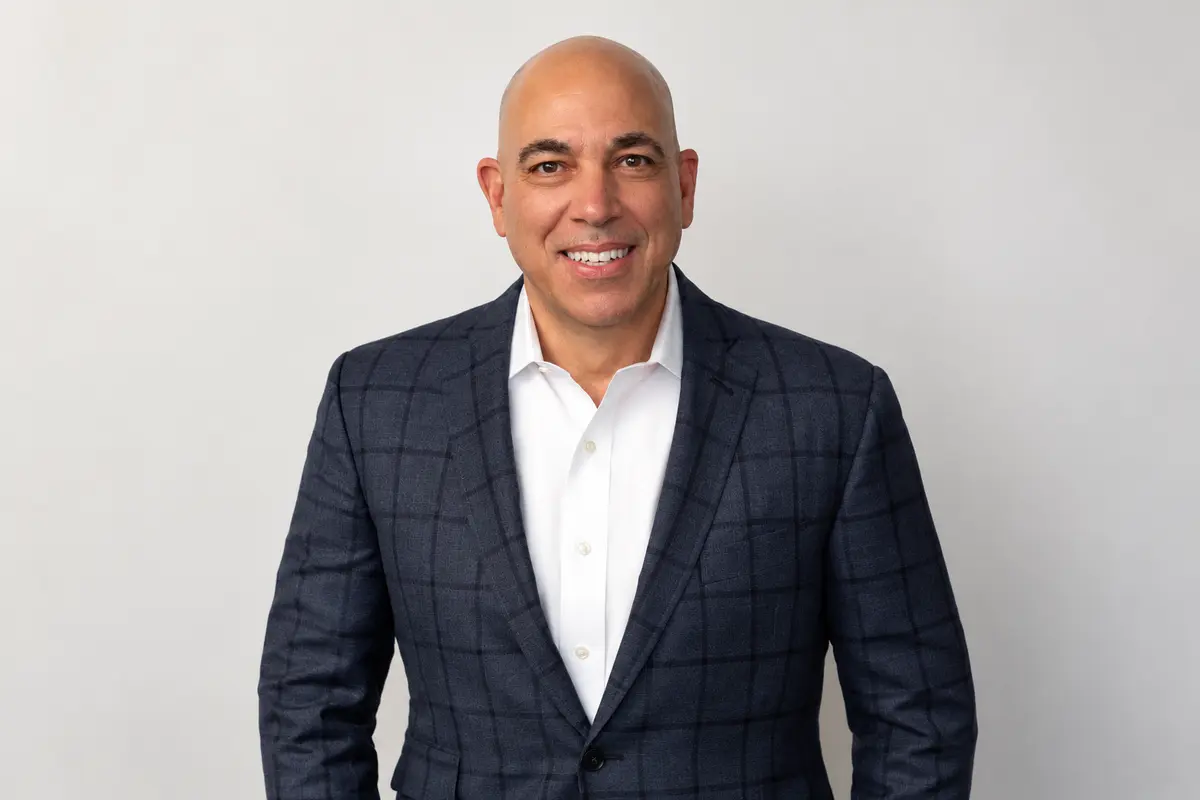
John Bruno took responsibility for aligning the print, digital services and IT services businesses. Louie Pastor returned as chief transformation and administrative officer, overseeing the Reinvention Office and Global Business Services. Flor Colon became chief legal officer and corporate secretary. Xerox targeted a 15% workforce reduction during the first quarter of 2024 as part of the new model. Proposed reductions were subject to consultation with local works councils and employee representatives where applicable. The percentage was an announced target, with consultation requirements attached, rather than a completed headcount reduction.
ITsavvy adds infrastructure and managed IT services
On 17 October 2024, Xerox agreed to acquire ITsavvy, an Oak Brook, Illinois-based provider of integrated IT products and associated services. The announced $400 million consideration consisted of a $180 million cash payment and $220 million in secured promissory notes. Customary adjustments and escrow arrangements applied. ITsavvy was a portfolio company of the private-equity firm GenNx360 Capital Partners. Xerox expected the deal to close during the fourth quarter, subject to merger clearance. This transaction concerned IT services, separate from the subsequent agreement to acquire Lexmark’s printing business.
ITsavvy had been founded in 2004 and generated more than $400 million in trailing-twelve-month revenue. Its services included equipment lifecycle management, deployment and managed IT, addressing networking, cloud migration and workplace productivity. Xerox’s John Bruno linked the acquisition to its plan to diversify revenue in the United States, Canada and the United Kingdom. ITsavvy chief executive Munu Gandhi expected the combination to expand the services available to clients in those markets. Xerox projected an immediate benefit to adjusted earnings per share and free cash flow when it announced the agreement.
The 2024 financial baseline
Xerox’s 2024 revenue was $6.221 billion, down 9.7% from 2023, or 9.5% at constant currency. The results, announced on 28 January 2025, included a GAAP net loss of approximately $1.32 billion. A roughly $1 billion after-tax, noncash goodwill impairment contributed to that loss. Adjusted net income was $135 million, equivalent to 97 cents per share, and adjusted operating margin was 4.9%. Operating cash flow reached $511 million, while free cash flow was $467 million. The annual comparison preceded the July 2025 consolidation of Lexmark.

Fourth-quarter revenue was $1.613 billion, declining 8.6% year on year, or 8.0% at constant currency. Xerox reported a $21 million GAAP net loss alongside $49 million in adjusted net income. The quarter’s adjusted operating margin was 6.4%, an increase of one percentage point from the prior-year period. Operating cash flow was $351 million and free cash flow was $334 million.
Financing with separate purposes and security rankings
Xerox closed two secured note offerings on 11 April 2025. The first comprised $400 million in senior secured first-lien notes carrying a 10.250% coupon and maturing in 2030. The second comprised $400 million in senior secured second-lien notes carrying a 13.500% coupon and maturing in 2031. The first-lien proceeds, together with cash, were intended to redeem Xerox’s 5.000% notes due in 2025 and cover associated expenses. Pending that redemption, Xerox could use the proceeds for general corporate purposes, including repayment of $95 million in term-loan borrowing.

The second-lien financing had a different role. Xerox intended to apply its proceeds to part of the Lexmark purchase price, repayment of substantially all Lexmark’s outstanding debt, and transaction expenses. Those proceeds entered an escrow account pending satisfaction of release conditions, including completion of the acquisition. If the acquisition did not close by 22 December 2025, subject to extension, or certain other events occurred, special mandatory-redemption provisions applied.
First-quarter reporting separates print and IT
Xerox’s first-quarter 2025 revenue was $1.457 billion, down 3.0% from the prior year, or 1.1% at constant currency. Print and Other generated $1.294 billion, declining 9.4%. IT Solutions generated $164 million, compared with $74 million in the corresponding quarter of 2024. The company changed its reportable segments to Print and Other and IT Solutions, replacing the previous combination of Print and Other and XFS. Earlier segment results were recast to reflect the new reporting structure, allowing the quarterly segment comparison to use the revised categories.
The quarter produced a $90 million GAAP net loss and a $4 million adjusted net loss. Adjusted operating income was $22 million, with a 1.5% margin. Operating cash outflow of $89 million and capital expenditure resulted in free cash outflow of $109 million. Xerox’s May outlook projected low-single-digit constant-currency revenue growth, at least a 5.0% adjusted operating margin and $350–$400 million in free cash flow for 2025. That outlook excluded the pending Lexmark acquisition and potential adverse tariff and trade-policy effects. Its scope was therefore different from later guidance that incorporated Lexmark.

The second quarter ends before Lexmark consolidation
Second-quarter 2025 revenue was $1.576 billion, down 0.1%, or 1.1% at constant currency. The reporting period ended before Lexmark joined the consolidated results on 1 July. IT Solutions revenue rose to $213 million from $84 million, while Print and Other revenue declined 8.6% to $1.366 billion. Xerox reported a $106 million GAAP net loss and a $77 million adjusted net loss. Adjusted operating income was $59 million, and adjusted operating margin was 3.7%. Free cash flow was negative $30 million.
The outlook accompanying the July results included Lexmark from the start of the third quarter. Xerox projected 16–17% constant-currency revenue growth for 2025, an adjusted operating margin around 4.5% and free cash flow around $250 million. The assumptions included $30–$35 million in tariff-related expenses after mitigation and modest acquisition synergies. The free-cash-flow forecast incorporated $60–$65 million in cash tariff expenses and $50–$75 million in one-time implementation costs for synergy savings. Tariff assumptions used rates proposed for 1 August.
The first consolidated quarter and integration targets
Third-quarter 2025 revenue increased 28.3% to $1.961 billion after Lexmark entered the consolidated results. Growth at constant currency was 27.0%. On Xerox’s pro forma comparison, revenue declined 7.8%. These comparisons used different bases and did not represent three measures of organic growth. The company reported a $760 million GAAP net loss and $27 million in adjusted net income. The quarter included a $102 million pretax inventory purchase-accounting adjustment associated with Lexmark and a $467 million tax expense for valuation allowances against deferred tax assets.

By the 30 October results announcement, Xerox had raised its forecast for Lexmark cost synergies to at least $300 million. It had repaid $226 million of debt, net, since the acquisition closed. Quarterly free cash flow was $131 million. Xerox reduced its annual outlook to 13% constant-currency revenue growth, an adjusted operating margin around 3.5% and free cash flow around $150 million. The integration target concerned anticipated savings; the debt repayment and quarterly cash flow were reported outcomes.
Full-year 2025 and the cash-flow classification
Xerox’s 2025 revenue reached $7.022 billion, increasing 12.9%, or 12.2% at constant currency. Its pro forma comparison showed a 7.6% decline. GAAP net loss was approximately $1.03 billion, while adjusted net loss was $62 million. Adjusted operating margin was 3.5%. Free cash flow totaled $133 million for the year; the fourth quarter contributed $184 million. Xerox also reported $366 million in net debt repayment since the Lexmark closing. These results were announced on 29 January 2026 and retained the acquisition’s actual consolidation date.

A $43 million cash-flow reclassification affected the annual presentation. Pre-existing balances between Xerox and Lexmark required operating-cash-flow treatment under U.S. GAAP rather than inclusion in the purchase price within investing cash flow. After the third-quarter earnings announcement, Xerox reclassified that amount from investing to operating cash flow. The change did not alter actual cash, underlying cash generation or fourth-quarter free cash flow. Xerox said its earlier 2025 free-cash-flow guidance had not anticipated that accounting treatment. The reclassification therefore needs to remain distinct from a new cash receipt, payment or additional operating improvement.
A3 devices reach the combined sales organization
By 2 March 2026, Xerox had brought the Xerox and Lexmark sales forces together around an increasingly integrated portfolio. Legacy Xerox clients and partners could obtain Lexmark’s 9-Series printers through their sellers. The A3 platform handled media from A6 to SRA3 and included finishing capabilities and PANTONE calibration. Its service design used long-life components, fewer parts, marked service points and guided maintenance cues. Those product characteristics accompanied the extension of the acquired hardware range through Xerox’s sales organization, beyond the legal completion of the acquisition.
Software compatibility covered Xerox Managed Print Services, Workflow Central, Easy Assist, Print & Scan Experience, App Gallery and ConnectKey applications. Cloud connectors included Translate & Print. Xerox specified post-consumer recycled content of 56% by weight for base-model multifunction printers and 73% for the base-model printer. The calculation followed IEEE 1680.2a-2017 procedures used by EPEAT. These were specified product-content figures with defined model and measurement bases, rather than a percentage applicable to every Xerox device or evidence that all components were recycled. The two percentages referred to different base-model product categories.

First-quarter 2026 comparisons include an estimated prior-year base
First-quarter 2026 revenue increased 26.7% to $1.846 billion, or 23.6% at constant currency. On the pro forma basis, revenue fell 3.7%. That comparison included estimated Lexmark results for January–March 2025, whereas actual Lexmark results had entered Xerox’s consolidated accounts from 1 July 2025. ITsavvy was included throughout both first-quarter periods, so the IT Solutions comparison required no acquisition-related pro forma adjustment. Print and Other revenue reached $1.692 billion, while IT Solutions revenue was $156 million.
Xerox reported a $105 million GAAP net loss, a $51 million adjusted net loss and a $10 million normalized adjusted net loss. The normalized measure incorporated tax effects excluded from adjusted earnings. Adjusted operating income was $72 million, with a 3.9% margin; free cash flow was negative $165 million. Louie Pastor was chief executive at the 30 April announcement. Management reaffirmed 2026 guidance for revenue above $7.5 billion, adjusted operating income of $450–$500 million and free cash flow around $250 million.
A4 products launch under the unified brand
Xerox introduced the C240/C245, C255a and C300/C303a/C305ae color printers and multifunction printers on 23 June 2026. They were the first hardware offerings launched under the unified Xerox brand after the Lexmark integration. The company positioned the range for small workgroups, small offices and hybrid working environments. The lineup incorporated a compact footprint, simplified setup and built-in security features. A refreshed brand identity accompanied the launch; it belonged to the later integration phase rather than the July 2025 acquisition announcement.
The product range supported Xerox Easy Assist and Print and Scan Experience applications for installation, management, printing and scanning. Xerox also specified integrated post-quantum cryptography support and more than 50% post-consumer recycled plastic content. The latter figure concerned plastic content and should not be substituted for the whole-device weight percentages specified for the A3 platform. At launch, the A4 products were shipping in North America, Western Europe, Australia and New Zealand. Xerox planned to announce additional regions as the rollout continued, so the initial shipping footprint was narrower than worldwide availability.
Second-quarter 2026 profit includes a tariff-receivable benefit
Xerox’s second-quarter 2026 revenue rose 22.0% to $1.922 billion, while pro forma revenue declined 6.5%. GAAP net income was $13 million and adjusted net income was $55 million. Adjusted operating income of $203 million and the 10.6% adjusted operating margin included a $105 million pretax benefit from recognizing IEEPA tariff receivables. Xerox sold the receivable rights for $80 million in cash. Because the receivables had not been processed by the government at quarter-end, the proceeds were classified as financing cash flow and excluded from free cash flow.
Quarterly free cash flow was $11 million. Xerox said the proceeds would move into operating cash flow when processing occurred, with no change to total cash. It raised the Lexmark gross cost-synergy target by $50 million to at least $350 million. Updated annual guidance projected approximately $7.6 billion in revenue, $555–$605 million in adjusted operating income and around $250 million in free cash flow. The larger synergy target and annual outlook were forecasts. The tariff-related accounting benefit, cash sale proceeds and operating cash generation remained separate components of the quarter’s results.




















Leave a comment